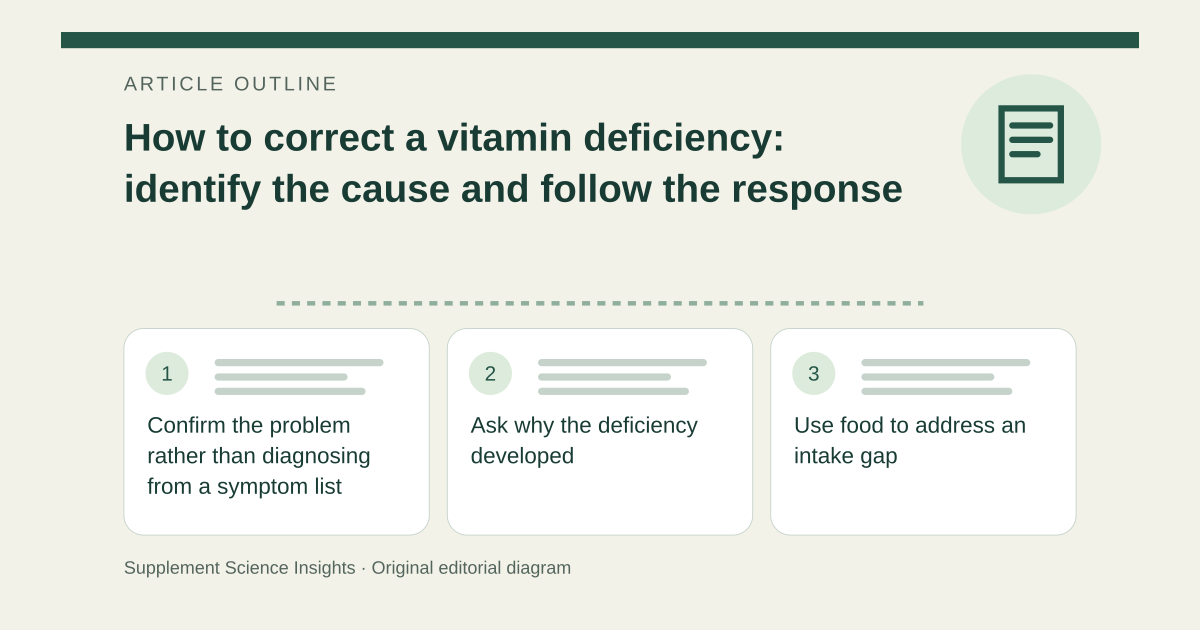
Confirm the problem rather than diagnosing from a symptom list
Tiredness, weight change and poor concentration can have several explanations. Discuss symptoms, diet, medicines and relevant medical history with a clinician, who can choose appropriate tests. A supplement label cannot establish which nutrient, if any, is deficient. [1][2]
Ask why the deficiency developed
Low intake is one explanation, but absorption problems, gastrointestinal surgery and medicines can contribute to B12 deficiency. Vitamin D status can also be affected by limited sunlight exposure, absorption and kidney-related activation. A treatment that ignores the cause may not prevent recurrence. [3][4]
Use food to address an intake gap
A varied diet can improve nutrient intake, with fortified foods useful for some needs. If overall undernutrition is present, NHS guidance describes a tailored plan that can include enriched foods, snacks or nutritional drinks. A single vitamin does not replace enough food, protein or help with difficulty eating. [5][6]
Choose the dose and route for the actual condition
A routine supplement serving and a supervised replacement course have different purposes. B12 replacement may require a specific oral regimen or injections depending on the cause and clinical findings. Severe deficiency or neurological symptoms should not be managed by guessing from a bottle’s front label. [3][2]
Monitor response and avoid duplication
Agree on how symptoms, intake and any relevant tests will be reviewed. Check multivitamins, single nutrients and fortified products together; more is not automatically better. Vitamin D excess, for example, can cause high calcium and serious harm. [6][2][4]
Build a plan that can last
Imagine a deficiency improves during treatment but the underlying absorption problem remains. Ask whether maintenance treatment and further monitoring are needed rather than stopping solely because one symptom improved. The goal is a sustained correction of the specific problem. [3][6]
| Step | Question |
|---|---|
| Identify | Which nutrient and what severity? |
| Explain | Intake, absorption or another cause? |
| Treat | Which dose and route fit? |
| Review | Response and maintenance needs? |
Sources for this article
- Tiredness and fatigue - NHS
Source consulted: 2026-09-21. This is a reference resource, not a claim that we conducted the studies or tested a product. - Dietary Supplements: What You Need to Know
Source consulted: 2026-09-21. This is a reference resource, not a claim that we conducted the studies or tested a product. - Vitamin B12 - Health Professional Fact Sheet
Source consulted: 2026-09-21. This is a reference resource, not a claim that we conducted the studies or tested a product. - Vitamin D - Health Professional Fact Sheet
Source consulted: 2026-09-21. This is a reference resource, not a claim that we conducted the studies or tested a product. - Eating a balanced diet - NHS
Source consulted: 2026-09-21. This is a reference resource, not a claim that we conducted the studies or tested a product. - Malnutrition – Treatment - NHS
Source consulted: 2026-09-21. This is a reference resource, not a claim that we conducted the studies or tested a product.