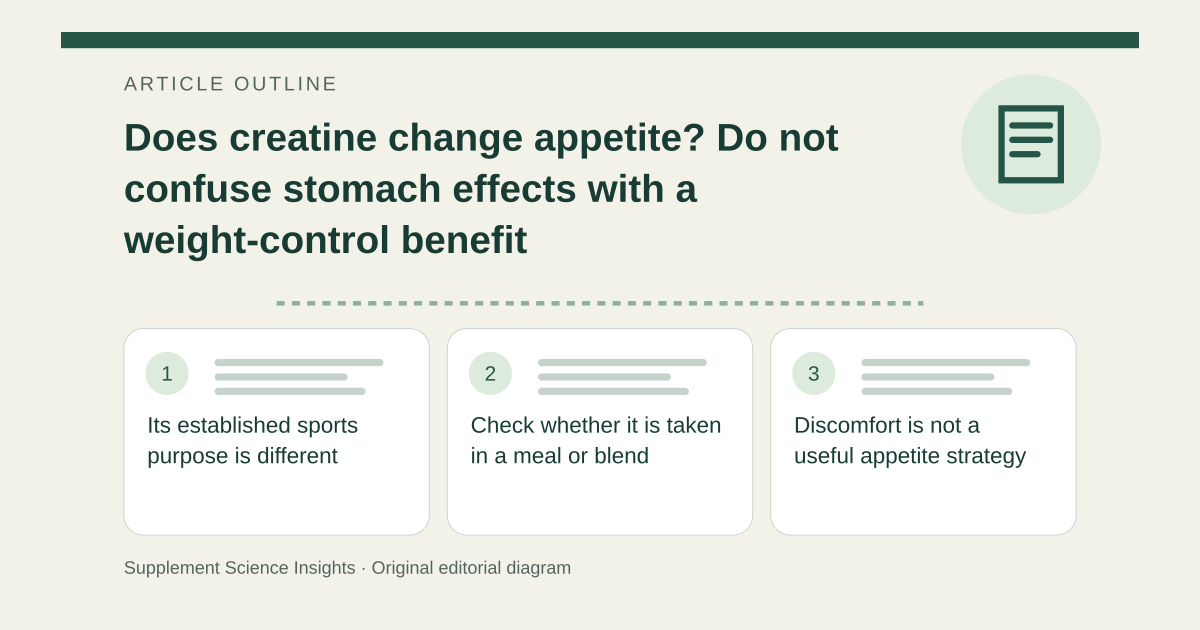
Its established sports purpose is different
NIH describes creatine as supporting repeated high-intensity efforts and training adaptations. That does not establish a reliable hunger-control effect. A muscle-performance finding should not be relabeled as proof that creatine reduces cravings or makes everyone eat more. [1]
Check whether it is taken in a meal or blend
A creatine scoop in a large protein shake is a different exposure from plain creatine in water. Review the complete drink, serving and any stimulants when appetite changes. This is a way to examine the cause, not proof that any one ingredient is responsible. [1][2]
Discomfort is not a useful appetite strategy
NIH notes gastrointestinal symptoms among reported creatine adverse effects. If nausea or abdominal discomfort makes eating difficult, review the product and amount rather than treating the effect as successful appetite suppression. More is not necessarily better for training. [1]
Persistent appetite or weight change needs attention
Ongoing unintentional weight loss deserves clinical assessment. A new supplement can be part of the history, but it should not become the default explanation for a persistent change in eating or weight. [3]
Track the actual change
Imagine appetite falls when creatine is added to a larger breakfast shake during a training change. Record food, fluid, exercise and symptoms together. That is more informative than assuming the powder has a predictable fat-loss or hunger effect. [1][2]
| Observation | Possible context to examine |
|---|---|
| Less hunger after a shake | Whole meal and serving |
| Nausea after a scoop | Product tolerance |
| Training changes | Different daily routine |
| Unintentional weight loss | Clinical assessment |
Sources for this article
- Dietary Supplements for Exercise and Athletic Performance - Health Professional Fact Sheet
Source consulted: 2026-09-21. This is a reference resource, not a claim that we conducted the studies or tested a product. - Dietary Supplements: What You Need to Know
Source consulted: 2026-09-21. This is a reference resource, not a claim that we conducted the studies or tested a product. - Unintentional weight loss - NHS
Source consulted: 2026-09-21. This is a reference resource, not a claim that we conducted the studies or tested a product.