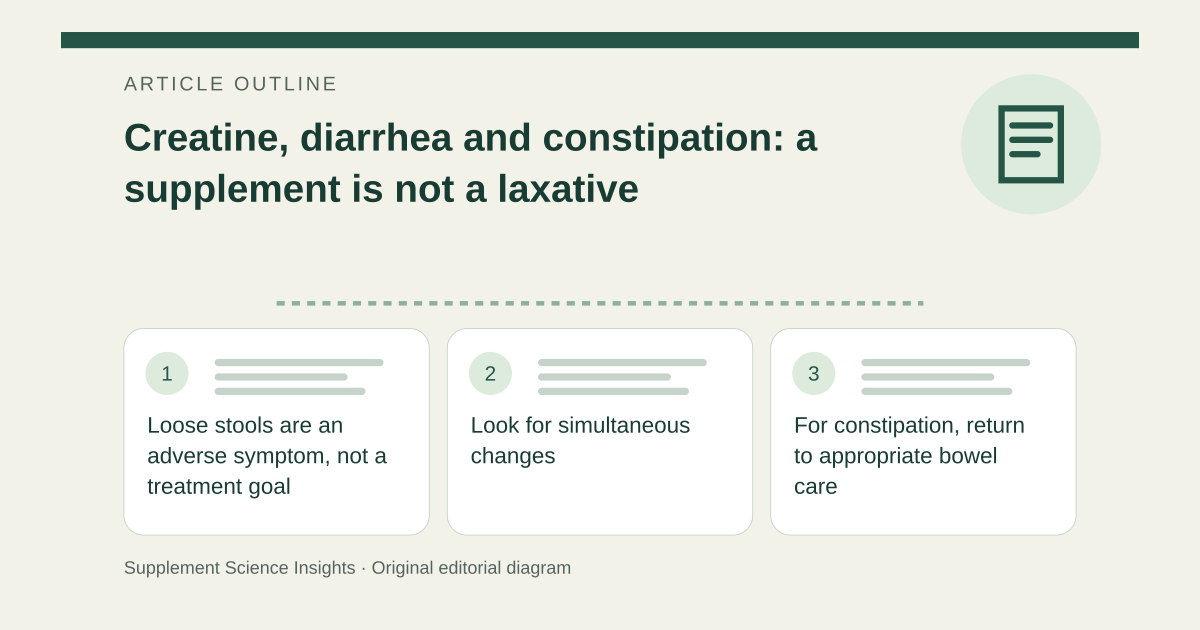
Loose stools are an adverse symptom, not a treatment goal
ODS describes reports of gastrointestinal complaints with creatine. A reaction after a large or concentrated serving does not mean it is acting as a safe laxative. Do not increase the serving to provoke a bowel movement or interpret diarrhea as improved absorption. [1]
Look for simultaneous changes
A training routine may change meals, shakes, caffeine, other ingredients and fluid intake at the same time. Record the exact formula and servings. A creatine-branded mixture cannot identify which component, if any, caused the bowel change. [1][2]
For constipation, return to appropriate bowel care
NIDDK recommends adequate fiber, introduced gradually, and suitable liquids to help it work. Fluid needs depend on health and circumstances; follow an individualized restriction when applicable. Creatine powder is not dietary fiber and should not replace these measures or prescribed treatment. [3]
There is no guaranteed permanent fix from one supplement change
If a product appears to trigger symptoms, pause it and seek advice when symptoms persist or are significant. Ongoing constipation, blood in stool or persistent abdominal pain warrant review. Do not assume that taking more water or changing creatine flavor resolves every cause. [4][2]
Use a clear record to investigate
Imagine constipation starts when ordinary meals are replaced with several shakes plus a new supplement. Review the food pattern and all products, not only creatine. The timing provides a clue, but resolving the symptom requires identifying the actual contributors. [3][2]
| Symptom | Useful next question |
|---|---|
| Diarrhea after a serving | Amount and other ingredients? |
| Constipation after diet changes | Fiber, fluids and medicines? |
| Persistent pain or blood | Clinical assessment needed? |
What does the serving-size trial explain about diarrhea?
Dose size at one sitting is one documented tolerability factor. In a 28-day randomized study of 59 male soccer players, diarrhea was reported by 55.6% of those assigned one 10 g serving daily and 28.6% of those assigned two 5 g servings. The placebo group also reported diarrhea, so the presence of a symptom alone did not establish that creatine caused it. [5]
The trial recorded gastrointestinal symptoms; it did not directly measure intestinal water movement or prove a mechanism for every stomach complaint. Its useful finding is narrower: the same daily amount was tolerated differently when delivered as one or two servings in this population. Other ingredients, meals and illnesses still matter, and the study protocol is not a personal dosing instruction. [5]
Sources for this article
- Dietary Supplements for Exercise and Athletic Performance - Health Professional Fact Sheet
Source consulted: 2026-09-21. This is a reference resource, not a claim that we conducted the studies or tested a product. - Dietary Supplements: What You Need to Know
Source consulted: 2026-09-21. This is a reference resource, not a claim that we conducted the studies or tested a product. - Eating, Diet, & Nutrition for Constipation - NIDDK
Source consulted: 2026-09-21. This is a reference resource, not a claim that we conducted the studies or tested a product. - Constipation - NIDDK
Source consulted: 2026-09-21. This is a reference resource, not a claim that we conducted the studies or tested a product. - Ostojic and Ahmetovic — Gastrointestinal distress after creatine supplementation: are side effects dose dependent?
Source consulted: 2026-10-28. This is a reference resource, not a claim that we conducted the studies or tested a product.