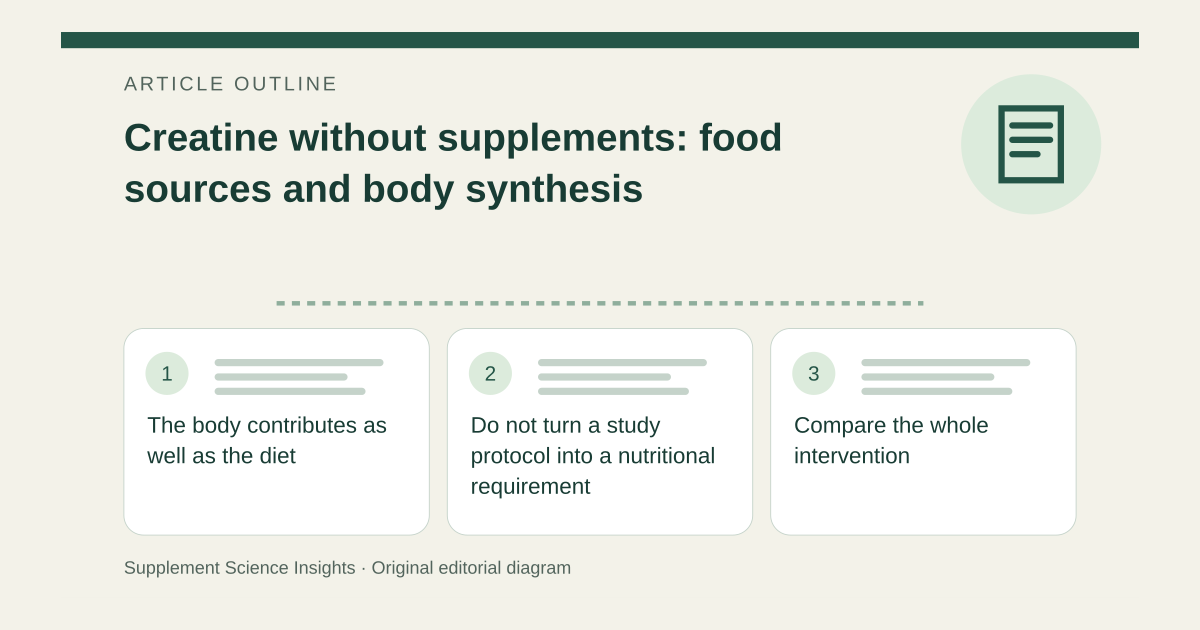
The body contributes as well as the diet
ODS describes creatine synthesis in the liver and kidneys using amino-acid precursors and identifies meat and fish as dietary sources. Creatine and phosphocreatine support rapid energy provision in muscle through the ATP system. [1]
The presence of creatine in a food does not imply that the food supplies the same concentrated exposure used in supplementation trials. Dietary choice and a performance intervention answer different questions. [1]
Do not turn a study protocol into a nutritional requirement
A person avoiding animal foods still has endogenous creatine synthesis. Whether a supplement fits a particular training goal is a separate assessment, rather than a conclusion that the diet is automatically deficient in an essential vitamin. [1]
Eating more of a creatine-containing food also changes protein, calories and other nutrients. Trying to reproduce a loading dose through very large food portions is not an evidence-based requirement derived from the physiology. [1]
Compare the whole intervention
Imagine a study uses concentrated creatine while a meal contains a modest dietary amount. The meal cannot be assigned the study’s effect simply because the ingredient occurs in both. Training, total diet and exposure remain different.
| Detail | Implication |
|---|---|
| Body synthesis | Endogenous contribution |
| Meat and fish | Dietary contribution |
| Loading protocol | A studied intervention, not a daily need |
Sources for this article
- NIH ODS: Dietary Supplements for Exercise and Athletic Performance
Source consulted: 2026-09-17. This is a reference resource, not a claim that we conducted the studies or tested a product.