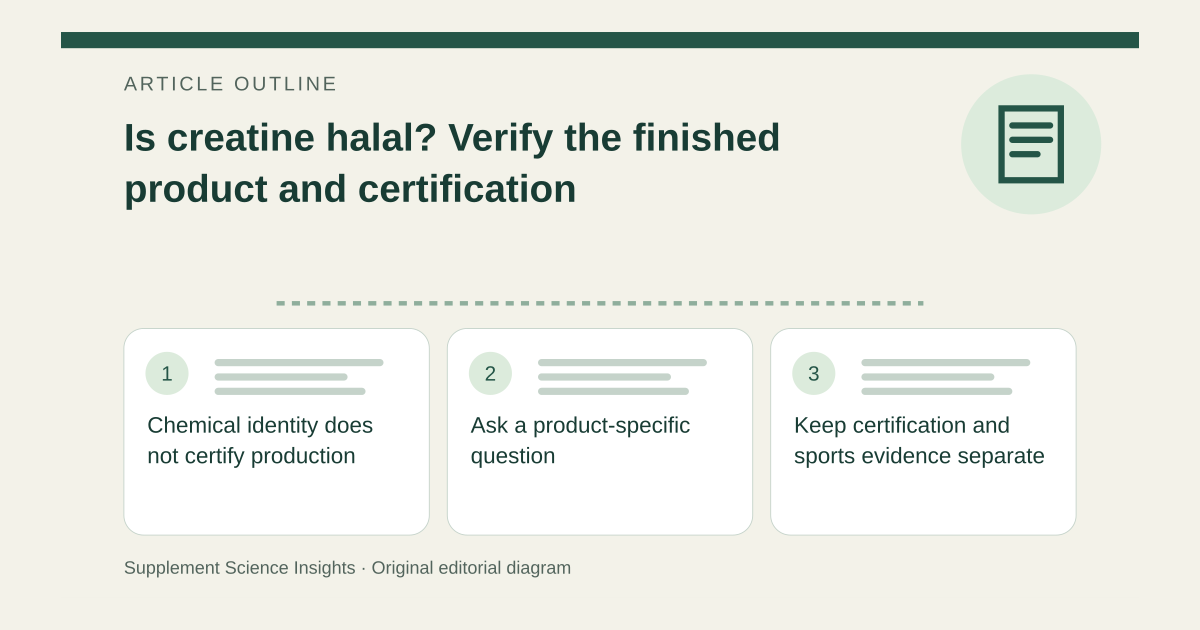
Chemical identity does not certify production
Creatine identifies the dietary ingredient, while a finished product can include flavors, capsule materials and other components. A label naming creatine monohydrate does not provide a full account of processing inputs or a religious certification. The distinction is especially relevant when comparing a plain powder with capsules or gummies. [1]
Ask a product-specific question
If halal status is required, seek a current certificate or manufacturer sourcing documentation for the exact product, and confirm it with the named certifier where available. This is a practical verification approach, not a ruling that a particular ingredient source is permissible under every standard. No current brand or certification has been assessed here. [1]
Keep certification and sports evidence separate
Imagine two products have the same creatine amount, but only one has documentation acceptable to the user’s chosen standard. That documentation addresses a dietary requirement; it does not show a superior training effect. Similarly, exercise evidence for creatine does not authenticate a halal logo on a retail bottle. [2][3]
| Example | Meaning |
|---|---|
| Creatine monohydrate | Ingredient identity |
| Capsule and flavor ingredients | Part of the finished product |
| Current certification | Separate sourcing verification |
Sources for this article
- Questions and Answers on Dietary Supplements | FDA
Source consulted: 2026-09-20. This is a reference resource, not a claim that we conducted the studies or tested a product. - Dietary Supplements for Exercise and Athletic Performance - Health Professional Fact Sheet
Source consulted: 2026-09-20. This is a reference resource, not a claim that we conducted the studies or tested a product. - Dietary Supplements: What You Need to Know
Source consulted: 2026-09-20. This is a reference resource, not a claim that we conducted the studies or tested a product.