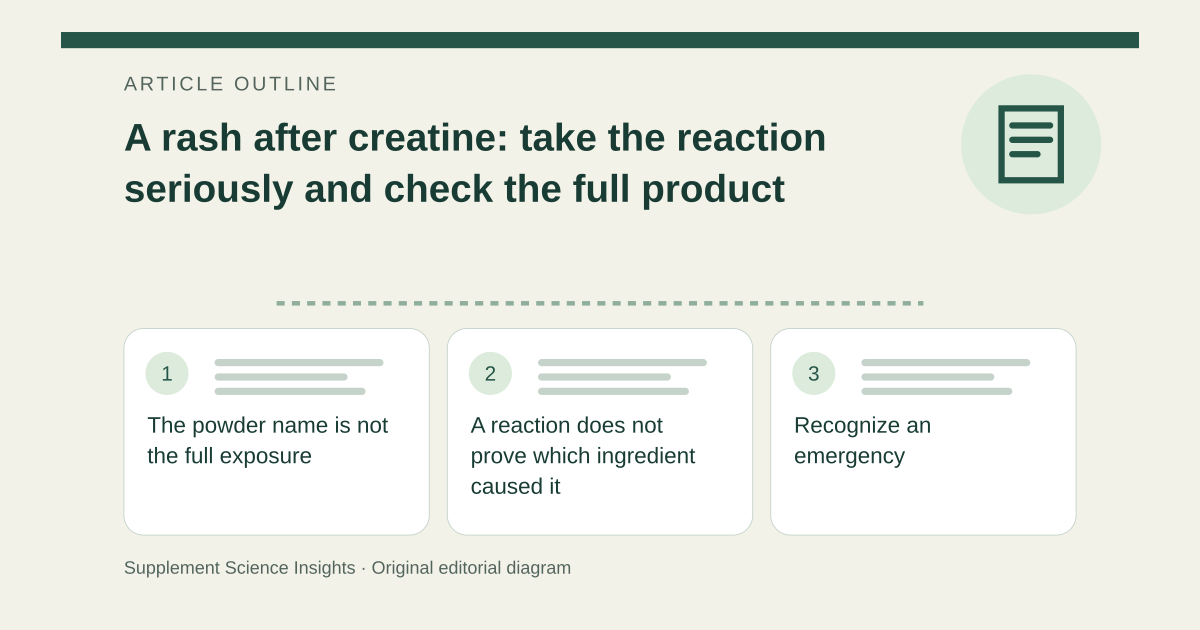
The powder name is not the full exposure
A product may contain flavors, colors, protein ingredients or other supplements in addition to creatine. NIH notes that multi-ingredient products require their own assessment. Keep the ingredient list and lot information rather than assuming every product labeled creatine is identical. [1][2]
A reaction does not prove which ingredient caused it
FDA describes hives, rash, itching, swelling and gastrointestinal or respiratory symptoms among possible allergic reactions. The timing helps an assessment, but it cannot distinguish an ingredient allergy from every other cause of a rash. The inspected sports evidence does not establish a predictable creatine-allergy rate. [3][1]
Recognize an emergency
Trouble breathing, throat or tongue swelling, fainting or other signs of anaphylaxis require emergency help. Use prescribed emergency treatment according to the person’s allergy plan. Do not take another serving to see whether the reaction happens again. [3]
Preserve the evidence for clinical review
Stop a supplement suspected of causing a serious adverse reaction, seek care and retain the container. FDA encourages reporting suspected supplement problems. Include other foods, medicines and exercise exposures in the timeline; an adverse-event report is a safety signal, not proof of a specific molecular cause. [4][3]
Avoid a self-directed rechallenge
Imagine a flavored blend causes hives and someone wants to test a larger scoop of a different brand. Clinical advice should come first. A different label may change ingredients, but it does not make an unsupervised allergy experiment appropriate. [3][2]
| Detail | Why keep it? |
|---|---|
| Full label and lot | Identifies the actual product |
| Timing and other exposures | Helps evaluate possible causes |
| Breathing or throat symptoms | Emergency response |
| Repeated dosing | Not a safe way to confirm allergy |
Sources for this article
- Dietary Supplements for Exercise and Athletic Performance - Health Professional Fact Sheet
Source consulted: 2026-09-21. This is a reference resource, not a claim that we conducted the studies or tested a product. - Dietary Supplements: What You Need to Know
Source consulted: 2026-09-21. This is a reference resource, not a claim that we conducted the studies or tested a product. - Food Allergies: What You Need to Know | FDA
Source consulted: 2026-09-21. This is a reference resource, not a claim that we conducted the studies or tested a product. - How to Report a Problem with Dietary Supplements | FDA
Source consulted: 2026-09-21. This is a reference resource, not a claim that we conducted the studies or tested a product.