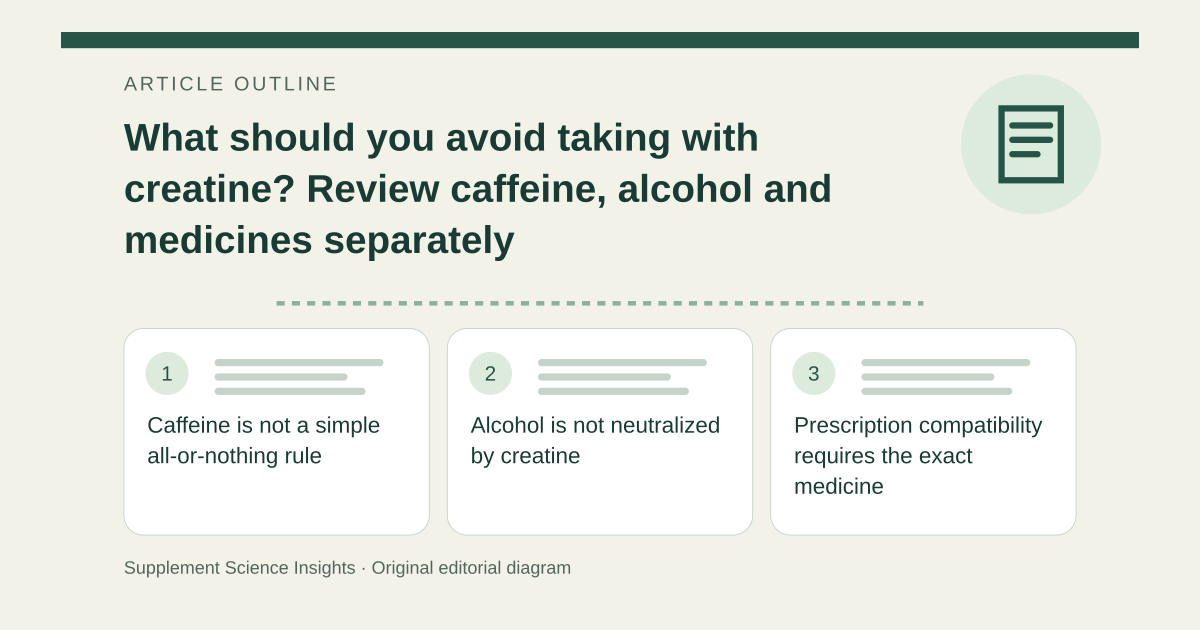
Caffeine is not a simple all-or-nothing rule
A systematic review found mixed results for repeated caffeine use during creatine supplementation and generally less concern when acute caffeine followed a loading period. Gastrointestinal tolerance may matter. This does not establish a universal waiting interval, and excess caffeine can still cause anxiety, sleep problems or palpitations. [1][2]
Alcohol is not neutralized by creatine
A systematic review of alcohol after resistance exercise raised concerns about muscle protein synthesis and some recovery outcomes, although findings varied. It was not a direct test of every creatine-alcohol combination. Do not use creatine as an antidote or assume a fixed waiting period removes alcohol’s effects. [3]
Prescription compatibility requires the exact medicine
A sports-benefit study cannot clear creatine alongside every anticoagulant, antibiotic or steroid regimen. Bring the full label and health context to a pharmacist or prescriber. Do not change warfarin treatment, skip antibiotic doses or abruptly stop prednisone to accommodate supplementation. [4][5][6]
Added ingredients can create the interaction
For example, magnesium in a blend can interfere with absorption of certain antibiotics; that is not evidence that creatine itself causes the same interaction. Timing depends on the drug and formulation. Count overlapping caffeine and other ingredients across powders, drinks and tablets. [7][2]
Avoid stacking without a defined purpose
NIH cautions that evidence for individual ingredients does not necessarily establish the safety or benefit of a combination. More ingredients make attribution of symptoms harder. A clear purpose and transparent formula are more useful than an ever-growing stack. [4][8]
Make the combination question concrete
Imagine someone asks whether coffee, an antibiotic and a creatine blend can all be taken together. Identify the antibiotic and every ingredient first. Caffeine tolerance and mineral-drug timing are separate questions, and neither is answered by a blanket yes or no about creatine. [7][2][4]
| Exposure | Separate issue |
|---|---|
| Caffeine | Total dose, sleep and tolerance |
| Alcohol | Recovery effects, not an antidote situation |
| Prescription medicine | Exact drug and health context |
| Added minerals | Potential drug-specific absorption interaction |
Sources for this article
- Interaction Between Caffeine and Creatine When Used as Concurrent Ergogenic Supplements: A Systematic Review.
Source consulted: 2026-09-21. This is a reference resource, not a claim that we conducted the studies or tested a product. - Spilling the Beans: How Much Caffeine is Too Much? | FDA
Source consulted: 2026-09-21. This is a reference resource, not a claim that we conducted the studies or tested a product. - The Effects of Alcohol Consumption on Recovery Following Resistance Exercise: A Systematic Review - PMC
Source consulted: 2026-09-21. This is a reference resource, not a claim that we conducted the studies or tested a product. - Dietary Supplements for Exercise and Athletic Performance - Health Professional Fact Sheet
Source consulted: 2026-09-21. This is a reference resource, not a claim that we conducted the studies or tested a product. - Warfarin: medicine used to prevent and treat blood clots - NHS
Source consulted: 2026-09-21. This is a reference resource, not a claim that we conducted the studies or tested a product. - Prednisone: MedlinePlus Drug Information
Source consulted: 2026-09-21. This is a reference resource, not a claim that we conducted the studies or tested a product. - Magnesium - Health Professional Fact Sheet
Source consulted: 2026-09-21. This is a reference resource, not a claim that we conducted the studies or tested a product. - Dietary Supplements: What You Need to Know
Source consulted: 2026-09-21. This is a reference resource, not a claim that we conducted the studies or tested a product.