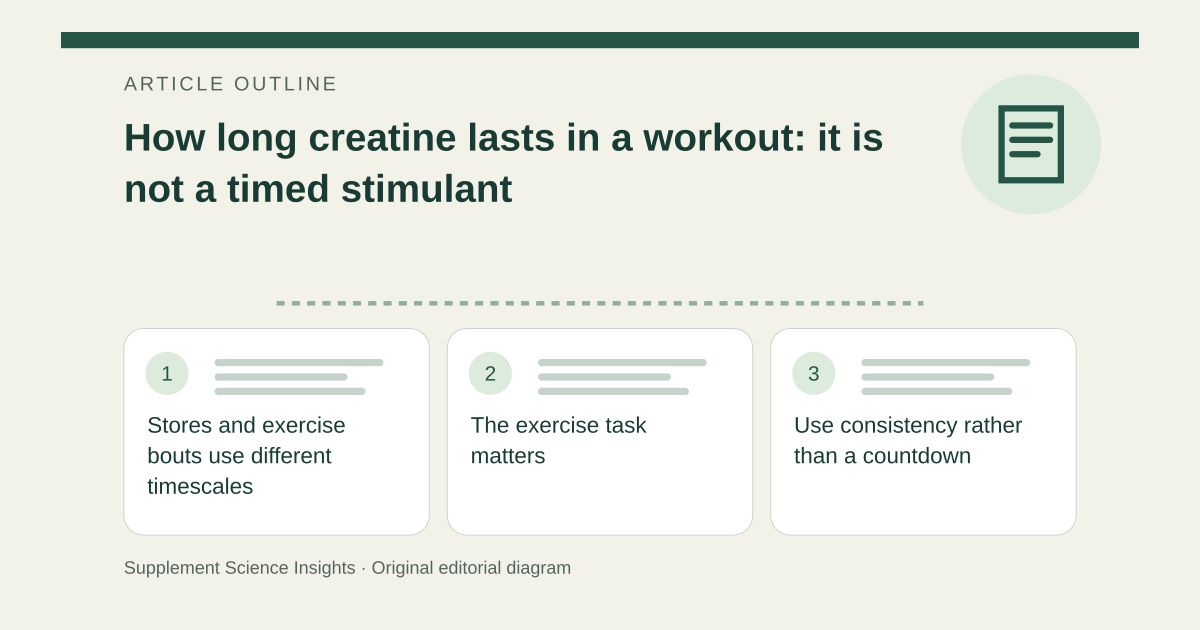
Stores and exercise bouts use different timescales
Creatine supplementation is studied as a way to increase muscle creatine availability. Within exercise, the phosphocreatine system helps rapidly regenerate ATP during brief intense effort. These are different processes: neither establishes that one scoop works for a fixed number of hours after swallowing it. [1]
The exercise task matters
Evidence is strongest for particular repeated high-intensity activities rather than an unlimited endurance boost. Rest intervals, training and other energy systems remain important. Feeling fatigued late in a session does not show that the morning creatine dose has suddenly expired or that another scoop will immediately restore performance. [1]
Use consistency rather than a countdown
Imagine a workout begins later than planned. The relevant question is the overall creatine protocol and training context, not whether a short stimulant window was missed. Loading and maintenance approaches concern stores over days and longer periods; they should not be converted into a promise of an exact duration for an individual workout. [2]
| Example | Meaning |
|---|---|
| Supplementation over time | Changes creatine stores |
| Brief intense effort | Uses rapid ATP-regeneration capacity |
| Late-session fatigue | Not a simple dose-expiry signal |
Sources for this article
- Dietary Supplements for Exercise and Athletic Performance - Health Professional Fact Sheet
Source consulted: 2026-09-20. This is a reference resource, not a claim that we conducted the studies or tested a product. - International Society of Sports Nutrition position stand: safety and efficacy of creatine supplementation in exercise, sport, and medicine - PMC
Source consulted: 2026-09-20. This is a reference resource, not a claim that we conducted the studies or tested a product.