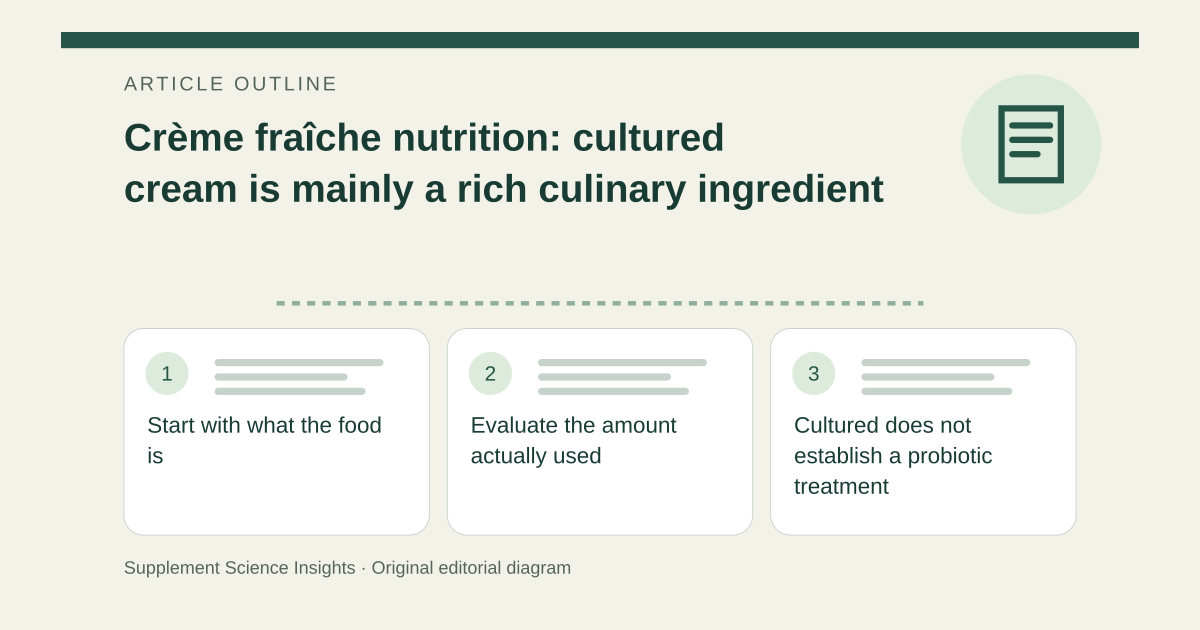
Start with what the food is
Vermont Creamery describes its crème fraîche as French-style cultured cream used in sauces, soups, dips and baking. The inspected ingredient list is pasteurized cultured cream, with milk as an allergen. Its culinary role is richness and texture, which helps determine a sensible recipe portion. [1]
Evaluate the amount actually used
Check the package for calories, saturated fat and serving size. A spoonful finishing a dish and a sauce containing several large servings contribute different amounts. This guide does not assign one nutrition panel to every brand or recipe. [2]
Cultured does not establish a probiotic treatment
Fermentation and a clinically demonstrated probiotic benefit are different claims. The inspected crème fraîche page does not supply a strain-specific clinical outcome or a live-organism dose through shelf life. Do not choose it as treatment for digestive symptoms on the strength of the word cultured. [3][1]
Match the substitution to the purpose
Imagine replacing a yogurt snack with an equal bowl of crème fraîche because both are cultured dairy foods. Compare the protein, saturated fat and calories first; they have different recipe roles. For a small topping, assess that actual portion within the whole meal. [2][1]
| Check | Interpretation |
|---|---|
| Cultured cream | Culinary identity, not a guaranteed probiotic effect |
| Small topping | Assess the portion used |
| Yogurt replacement | Compare protein, fat and calories |
Sources for this article
- Crème Fraîche | Vermont Creamery
Source consulted: 2026-09-20. This is a reference resource, not a claim that we conducted the studies or tested a product. - How to Understand and Use the Nutrition Facts Label | FDA
Source consulted: 2026-09-20. This is a reference resource, not a claim that we conducted the studies or tested a product. - Probiotics - Health Professional Fact Sheet
Source consulted: 2026-09-20. This is a reference resource, not a claim that we conducted the studies or tested a product.