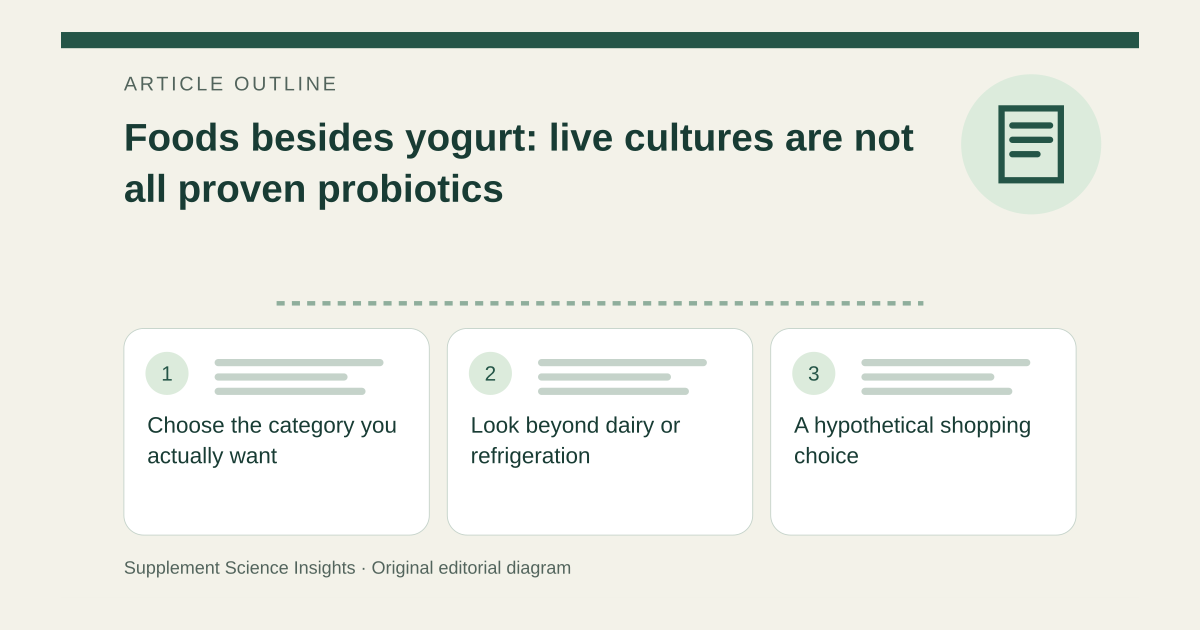
Choose the category you actually want
If the aim is dietary variety, fermented vegetables or cultured milk products may be useful food options. If the aim is a demonstrated probiotic effect, identify a studied organism and adequate viable amount. ODS notes that many fermented foods with live cultures do not typically contain proven probiotic microorganisms. [1]
Look beyond dairy or refrigeration
Some unfermented milks, juices and other foods have probiotics added. Conversely, some fermented foods are processed so they no longer contain live cultures. Refrigeration or a sour taste cannot identify a strain or prove efficacy. Read the actual culture declaration and storage directions for the product being considered. [1]
A hypothetical shopping choice
Imagine a shopper avoids yogurt and compares live-culture sauerkraut with a drink naming an added strain. The sauerkraut may meet a preference for fermented vegetables; the drink has more specific strain information to compare with research. Neither should be called best for every digestive complaint from the food name alone. [1]
| Hypothetical option | Useful distinction |
|---|---|
| Fermented vegetables | Food variety and culture status |
| Drink with added strain | Specific organism and amount to evaluate |
Sources for this article
- Probiotics - Health Professional Fact Sheet
Source consulted: 2026-09-20. This is a reference resource, not a claim that we conducted the studies or tested a product.