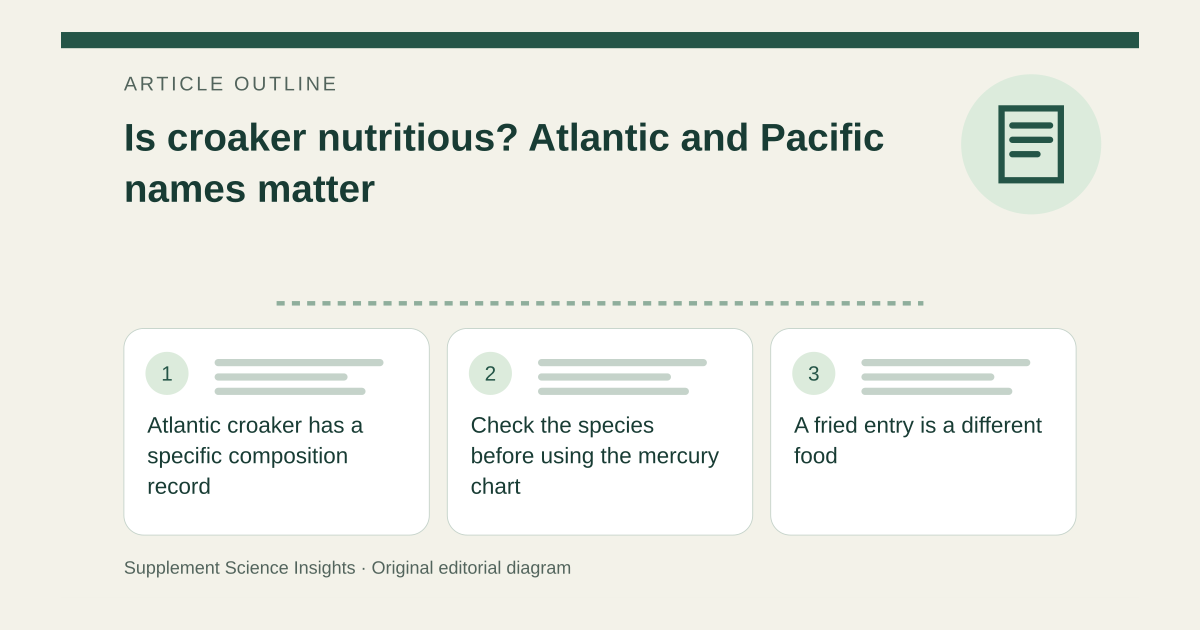
Atlantic croaker has a specific composition record
USDA SR Legacy lists raw Atlantic croaker at 104 calories, 17.78 g protein and 3.17 g fat per 100 g edible portion. EPA plus DHA total 0.220 g, or 220 mg. These historical raw-food values are a composition reference, not a suggestion to eat the fish raw or a guarantee for another croaker species. [1]
Check the species before using the mercury chart
FDA lists Atlantic croaker as a Best Choice, while white croaker/Pacific croaker is a Good Choice. During pregnancy or breastfeeding, those categories mean two to three versus one 4-ounce serving a week, respectively. Ask the seller which fish is supplied rather than relying on croaker alone. [2]
A fried entry is a different food
The USDA breaded-and-fried Atlantic croaker entry contains 221 calories, 18.2 g protein, 12.67 g fat and 348 mg sodium per 100 g. It includes a different preparation. Comparing it with the raw entry does not measure nutrient retention in one controlled cooking experiment. [1]
Use the name and recipe together
Imagine a menu lists fried croaker without a species. Clarify the fish identity for mercury guidance and use the prepared meal’s information for calories or sodium. Neither the raw Atlantic entry nor the broad menu name answers both questions. [1][2][3]
| Reference | What it tells you |
|---|---|
| Atlantic croaker | FDA Best Choice |
| White/Pacific croaker | FDA Good Choice |
| Breaded and fried | Different nutrient profile from raw fish |
Sources for this article
- USDA FoodData Central — SR Legacy April 2018 food composition dataset
Source consulted: 2026-09-20. This is a reference resource, not a claim that we conducted the studies or tested a product. - Advice about Eating Fish | FDA
Source consulted: 2026-09-20. This is a reference resource, not a claim that we conducted the studies or tested a product. - How to Understand and Use the Nutrition Facts Label | FDA
Source consulted: 2026-09-20. This is a reference resource, not a claim that we conducted the studies or tested a product.