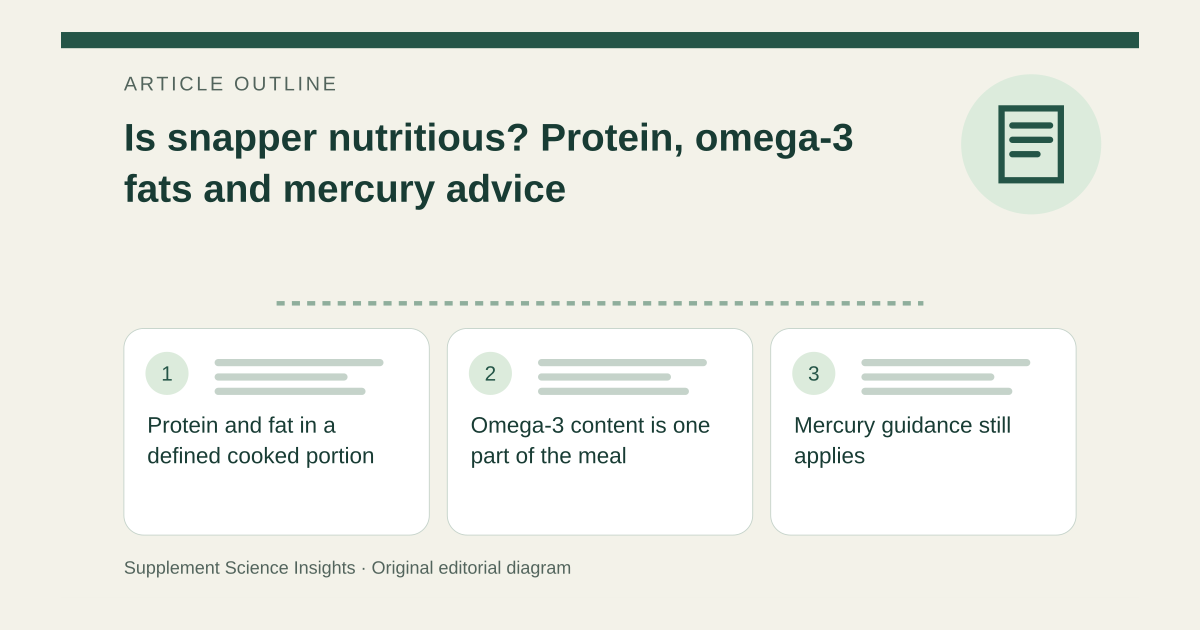
Protein and fat in a defined cooked portion
USDA SR Legacy lists 128 calories, 26.3 g protein and 1.72 g fat per 100 g of mixed-species snapper cooked with dry heat. The entry contains 0.048 g EPA and 0.273 g DHA: 0.321 g, or 321 mg, combined. It is a 2018 reference entry for mixed species, not a guarantee for every snapper product. [1]
Omega-3 content is one part of the meal
Snapper contains EPA and DHA, but the word fish does not imply a uniform omega-3 amount across species. Compare the same cooked weight and preparation. These nutrient figures describe the food and should not be used to promise a medical effect. [1][2]
Mercury guidance still applies
FDA lists snapper as a Good Choice. Its pregnancy and breastfeeding advice allows one 4-ounce serving a week from this category. That category is distinct from Best Choices, for which the chart permits more weekly servings. Consult local advisories for self-caught fish. [3]
Build the comparison around the whole serving
Imagine choosing between plain baked snapper and a breaded snapper sandwich. The plain dry-heat record helps describe the fish, but it does not include breading, frying oil, bread or sauce. Compare the full meal portion rather than assigning the plain fish’s calories to the sandwich. [1][4]
| Check | Interpretation |
|---|---|
| 100 g cooked reference | 26.3 g protein; 321 mg EPA plus DHA |
| Mixed-species entry | Actual products can differ |
| Breaded sandwich | Count the complete preparation |
Sources for this article
- USDA FoodData Central — SR Legacy April 2018 food composition dataset
Source consulted: 2026-09-20. This is a reference resource, not a claim that we conducted the studies or tested a product. - Omega-3 Fatty Acids - Health Professional Fact Sheet
Source consulted: 2026-09-20. This is a reference resource, not a claim that we conducted the studies or tested a product. - Advice about Eating Fish | FDA
Source consulted: 2026-09-20. This is a reference resource, not a claim that we conducted the studies or tested a product. - How to Understand and Use the Nutrition Facts Label | FDA
Source consulted: 2026-09-20. This is a reference resource, not a claim that we conducted the studies or tested a product.