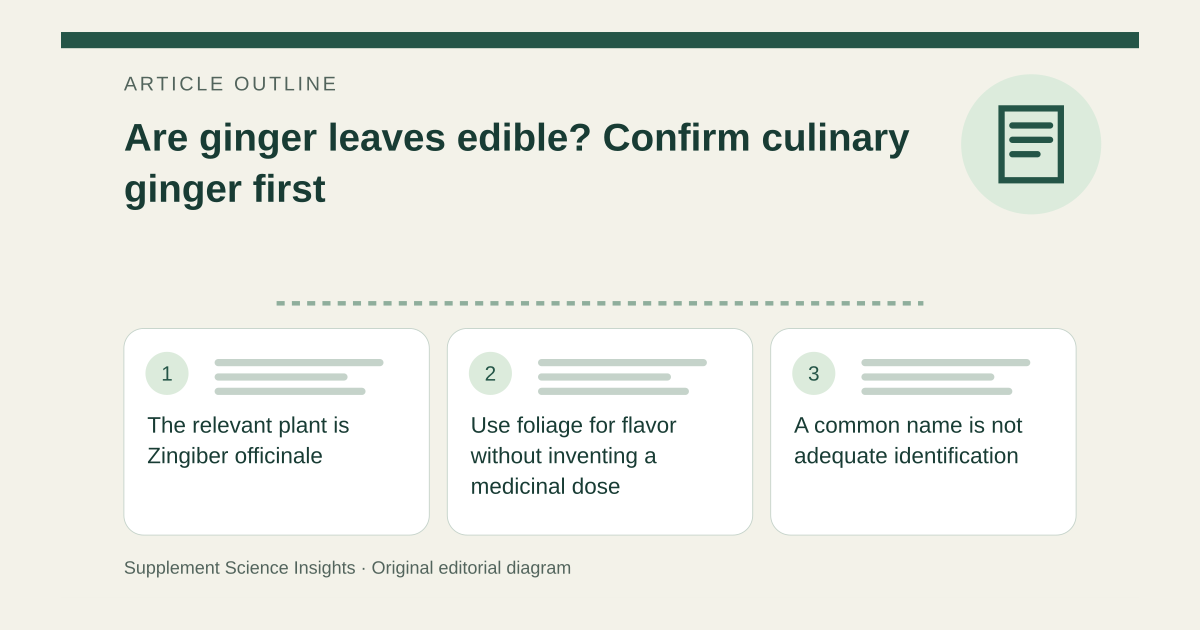
The relevant plant is Zingiber officinale
A University of Delaware cultivation presentation describes fresh ginger leaves sold for culinary use and foliage used dried, ground or for tea. This supports food use of culinary ginger foliage; it is not evidence that all plants called ginger have edible leaves. [1][2]
Use foliage for flavor without inventing a medicinal dose
The presentation does not provide a validated leaf-to-rhizome flavor ratio or a therapeutic tea dose. Start from a food recipe and the intended culinary ingredient rather than converting a supplement dose into leaves. Wash food-grade produce under running water, following FDA produce guidance. [1][3]
A common name is not adequate identification
Wisconsin extension distinguishes culinary ginger from ornamental relatives and from Asarum wild gingers, which should not be eaten because of aristolochic acid. Imagine a garden plant is labeled only wild ginger: do not use its leaves in tea on the strength of this article. [2]
| Item | Interpretation |
|---|---|
| Zingiber officinale foliage | Documented culinary use |
| Unknown ornamental ginger | Identity remains unresolved |
| Leaf tea | Not a standardized medical preparation |
Sources for this article
- Cultivation of baby Ginger in the Mid-Atlantic Region — University of Delaware
Source consulted: 2026-09-20. This is a reference resource, not a claim that we conducted the studies or tested a product. - Ginger, Zingiber officinale – Wisconsin Horticulture
Source consulted: 2026-09-20. This is a reference resource, not a claim that we conducted the studies or tested a product. - Selecting and Serving Produce Safely | FDA
Source consulted: 2026-09-20. This is a reference resource, not a claim that we conducted the studies or tested a product.