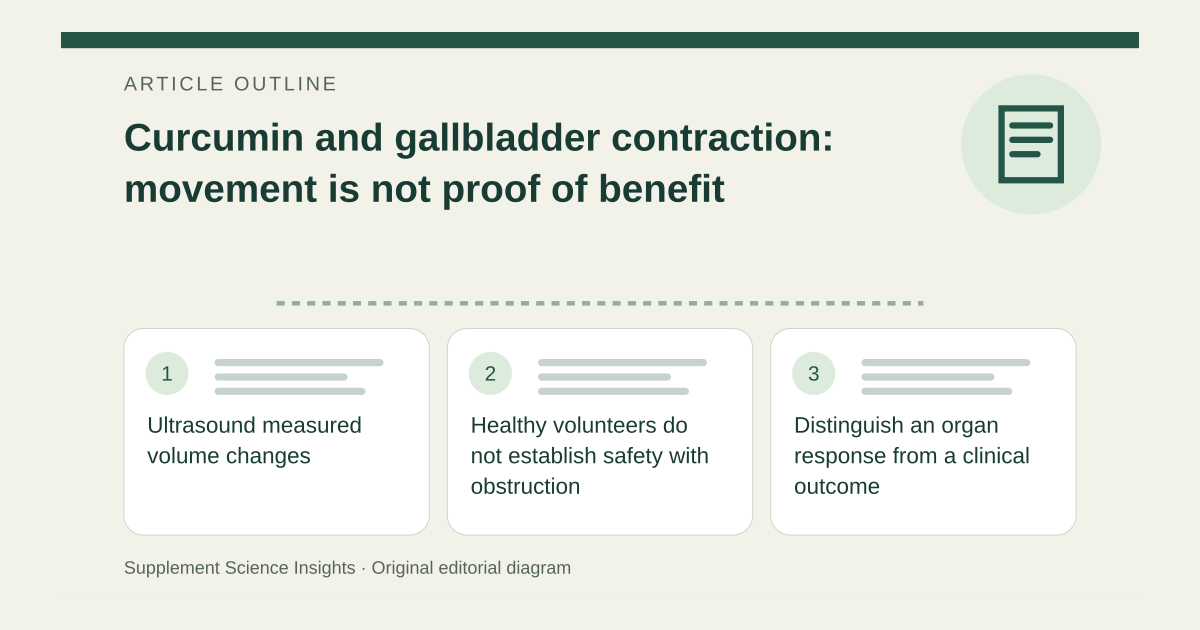
Ultrasound measured volume changes
Twelve healthy volunteers participated in a crossover experiment using three curcumin amounts. Ultrasound measurements showed progressively larger reductions in gallbladder volume two hours after administration. [1]
The relationship was not simply proportional: doubling the amount did not double contraction. These were short-term physiological measurements, not evidence that a disease had improved. [1]
Healthy volunteers do not establish safety with obstruction
The study did not enroll a population with gallstones, blocked bile ducts or a removed gallbladder. It cannot determine whether provoking contraction is helpful or safe in those settings. [1]
The small sample and brief observation also cannot establish an everyday supplement regimen. Funding and conflicts were not established from the abstract. Gallbladder-related symptoms and supplement decisions need clinical assessment; this experiment does not justify using turmeric to force bile flow or to treat a suspected blockage. [1]
Distinguish an organ response from a clinical outcome
Imagine a scan shows an organ changes volume after a substance. Whether that helps a person with disease requires a separate study of symptoms, complications and harms.
| Detail | Interpretation |
|---|---|
| 12 healthy volunteers | Narrow population |
| Ultrasound volume | Physiological outcome |
| Gallstone treatment | Not tested |
Sources for this article
- Effect of different curcumin dosages on human gall bladder - PubMed
Source consulted: 2026-09-19. This is a reference resource, not a claim that we conducted the studies or tested a product.