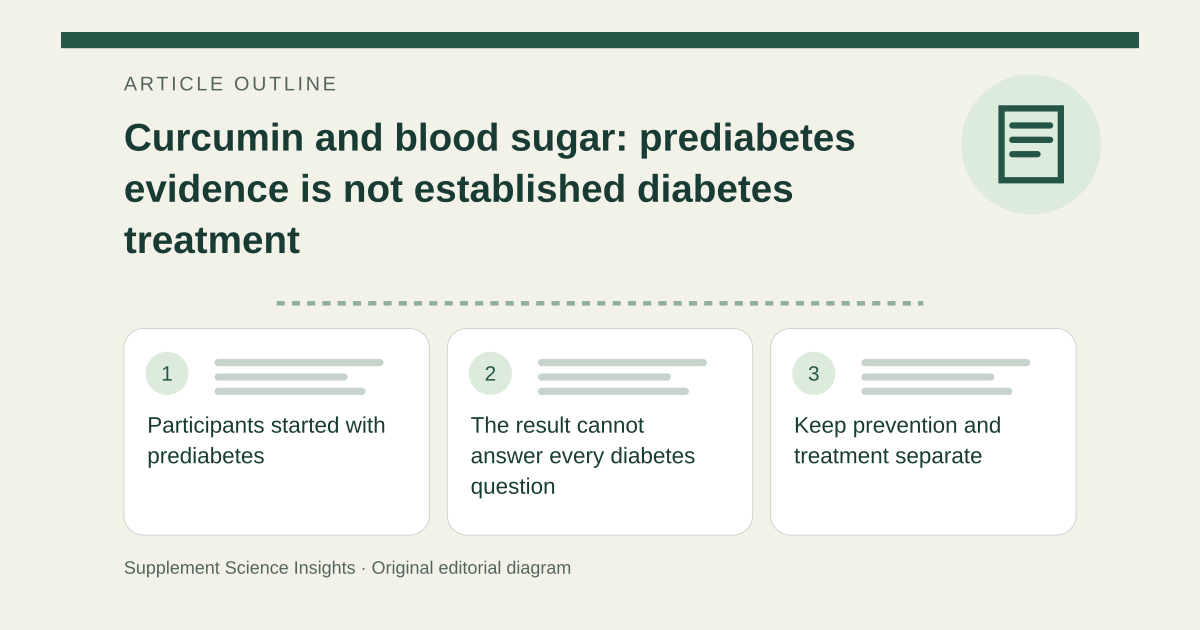
Participants started with prediabetes
The placebo-controlled trial included 240 people meeting prediabetes criteria. They received curcumin or placebo capsules for nine months, with repeated metabolic assessments. [1]
By the end, 16.4% of the placebo group had been diagnosed with type 2 diabetes, compared with none in the curcumin group. The investigators also reported differences in several insulin-related markers. [1]
The result cannot answer every diabetes question
This was not a trial of replacing diabetes medicines in people with established disease. It cannot show whether any benefit persists after supplementation stops, or whether a different extract or culinary turmeric produces the same result. [1]
The abstract describes minor adverse effects but does not fully establish funding, conflicts or long-term safety. A striking single-trial finding still requires corroboration. People managing diabetes should discuss supplement use with their clinician rather than treating these results as a dosing or medication-substitution plan. [1]
Keep prevention and treatment separate
Imagine an intervention delays a diagnosis in a higher-risk group. That does not establish that it can reverse the disease after diagnosis or replace treatment already prescribed.
| Detail | Interpretation |
|---|---|
| Prediabetes | Starting population |
| Nine months | Observation period |
| Diagnosed diabetes treatment | Different question |
Sources for this article
- Curcumin extract for prevention of type 2 diabetes - PubMed
Source consulted: 2026-09-19. This is a reference resource, not a claim that we conducted the studies or tested a product.