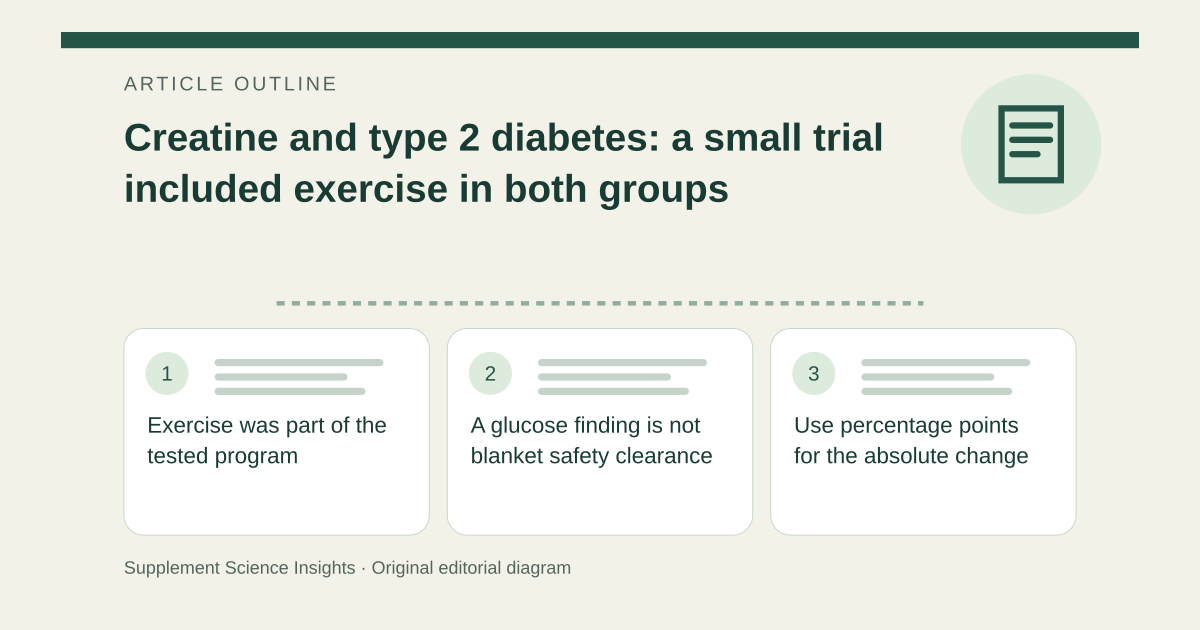
Exercise was part of the tested program
The randomized, double-blind trial analyzed 25 people with type 2 diabetes: 13 received creatine and 12 placebo. Both groups participated in exercise training for 12 weeks. [1]
HbA1c fell from an average of 7.4% to 6.4% in the creatine group, compared with 7.5% to 7.6% in the placebo group. The reported between-group difference was about 1.1 percentage points. [1]
A glucose finding is not blanket safety clearance
The trial reported comparable adverse effects between groups. With only 25 analyzed participants, that observation cannot establish long-term safety or safety in people with kidney disease or different medication regimens. [1]
It also cannot determine whether creatine without the exercise program would produce the same result. Funding and conflicts were not fully assessed from the abstract. Decisions about adding a supplement belong with the clinician managing the person’s diabetes and kidney health. [1]
Use percentage points for the absolute change
A hypothetical HbA1c change from 7.4% to 6.4% is a decline of one percentage point. Calling it a one-percent relative reduction would describe a different calculation.
| Detail | Interpretation |
|---|---|
| 25 analyzed | Small sample |
| Both groups exercised | Co-intervention |
| HbA1c | Glucose-control marker |
Sources for this article
- Creatine in type 2 diabetes: a randomized, double-blind, placebo-controlled trial - PubMed
Source consulted: 2026-09-19. This is a reference resource, not a claim that we conducted the studies or tested a product.