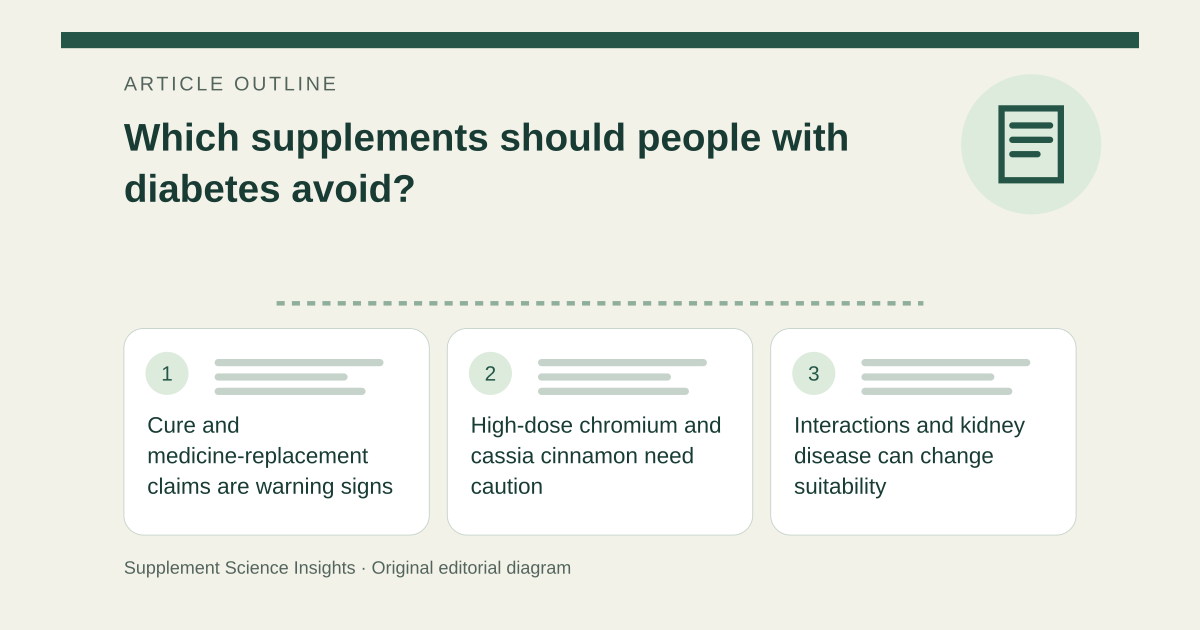
Cure and medicine-replacement claims are warning signs
NCCIH warns that unproved diabetes products may be harmful themselves and are harmful when they replace effective treatment. Do not reduce insulin or another prescription based on a supplement label or an isolated glucose reading. [1]
High-dose chromium and cassia cinnamon need caution
NCCIH reports kidney, liver and other adverse-event concerns after large chromium doses. Cassia cinnamon contains variable coumarin, which can worsen liver disease in susceptible people. Culinary use and concentrated long-term supplementation are different exposures. [1]
Interactions and kidney disease can change suitability
Herbal products can interact with conventional diabetes medicines. Kidney disease adds concerns about clearance, minerals and other ingredients. Bring the complete labels to the diabetes team, especially for glucose-support mixtures or greens products. [1][2]
Do not confuse caution with avoiding needed replacement
Imagine metformin use prompts assessment of B12 status. Treating a confirmed deficiency is a separate purpose from taking a blood-sugar blend. Review both the indication and monitoring rather than avoiding every supplement or assuming all are safe. [3][4]
| Finding | Next consideration |
|---|---|
| Claims to replace insulin | Reject the claim |
| High-dose chromium | Safety review needed |
| Cassia extract and liver disease | Coumarin concern |
| Confirmed deficiency | Targeted replacement may help |
Sources for this article
- Diabetes and Dietary Supplements: What You Need To Know | NCCIH
Source consulted: 2026-09-21. This is a reference resource, not a claim that we conducted the studies or tested a product. - “Kidney Detox” and Herbal Supplements: What’s Safe and What’s Not | National Kidney Foundation
Source consulted: 2026-09-21. This is a reference resource, not a claim that we conducted the studies or tested a product. - Vitamin B12 - Health Professional Fact Sheet
Source consulted: 2026-09-21. This is a reference resource, not a claim that we conducted the studies or tested a product. - Dietary Supplements: What You Need to Know
Source consulted: 2026-09-21. This is a reference resource, not a claim that we conducted the studies or tested a product.