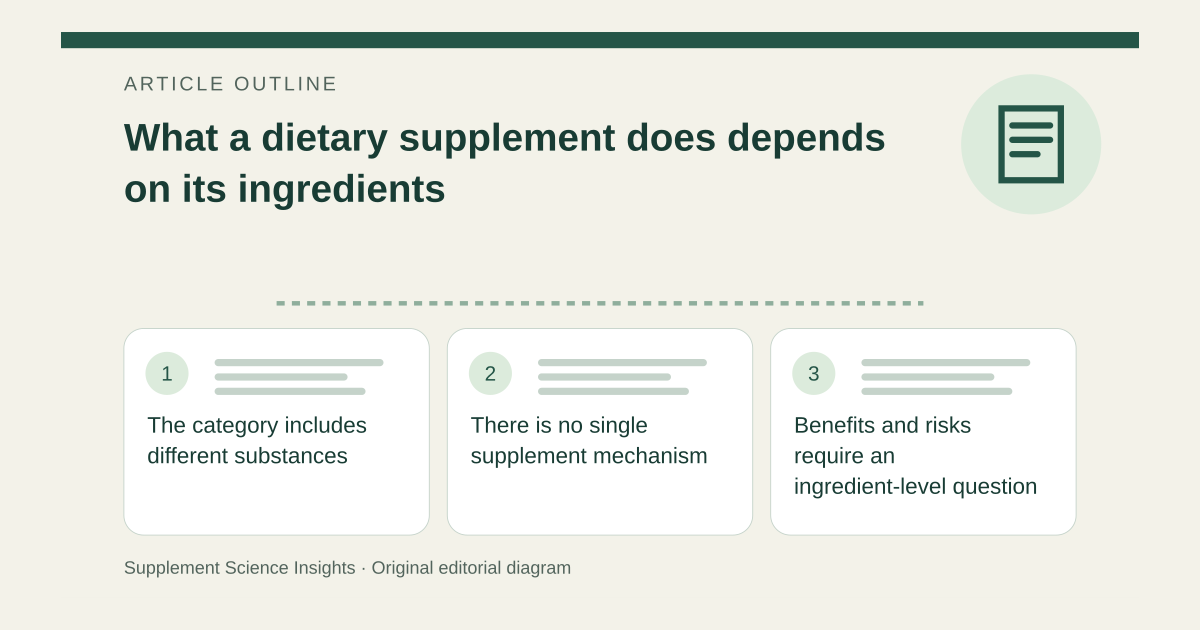
The category includes different substances
FDA describes dietary supplements as products intended for ingestion that contain dietary ingredients such as vitamins, minerals, botanicals or amino acids. Capsules and powders are common forms, but the physical format alone does not establish the category. A lotion used on skin is not a dietary supplement just because it contains a vitamin. [1]
There is no single supplement mechanism
A mineral supplement supplies a mineral; a botanical can contain multiple plant compounds. Whether either helps depends on the need, preparation and evidence for a defined outcome. Correcting inadequate intake is different from promising a general boost to an already adequate diet. The broad word supplement cannot answer how a particular formula works. [2]
Benefits and risks require an ingredient-level question
Imagine comparing a single-nutrient tablet with a blend of several herbs. Assess the tablet against a specific nutrient need and the blend against evidence for its actual ingredients and amounts. Include interactions and total intake. Being available for sale does not mean FDA approved the finished product for safety or effectiveness before marketing. [1]
| Example | Interpretation |
|---|---|
| Single nutrient | Assess intake and need |
| Multiple herbs | Assess the actual preparation |
| Retail availability | Not premarket approval |
Sources for this article
- Questions and Answers on Dietary Supplements | FDA
Source consulted: 2026-09-20. This is a reference resource, not a claim that we conducted the studies or tested a product. - Dietary Supplements: What You Need to Know
Source consulted: 2026-09-20. This is a reference resource, not a claim that we conducted the studies or tested a product.