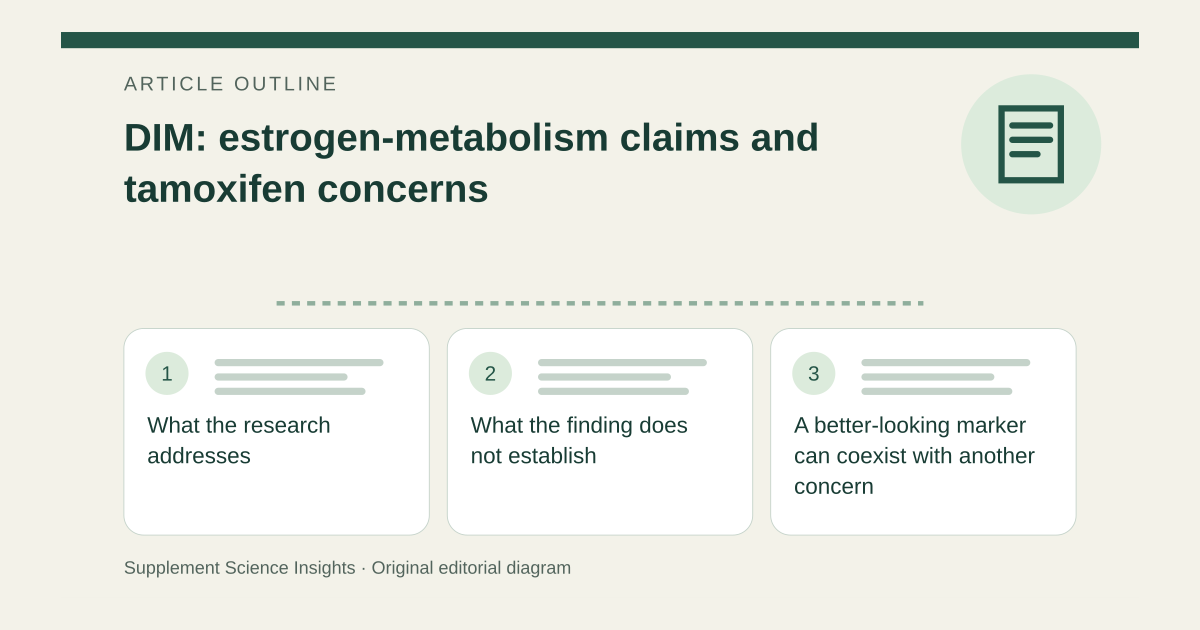
What the research addresses
Diindolylmethane, or DIM, is formed from indole-3-carbinol, a compound associated with cruciferous vegetables. Supplements are promoted for estrogen metabolism. MSK describes limited human evidence; changing hormone metabolites does not establish cancer prevention or a general benefit from “hormone balance.” [1]
What the finding does not establish
In research involving tamoxifen, favorable-looking changes in estrogen measures occurred alongside reduced levels of an active tamoxifen metabolite. That combination illustrates why one laboratory endpoint cannot settle whether adding a supplement is helpful. [1]
A better-looking marker can coexist with another concern
Imagine a supplement moves laboratory marker A in a desired direction while lowering exposure to medicine B. Looking only at marker A would miss part of the decision. The relevant question is the net clinical effect of the combination, not whether one arrow on a diagram points the preferred way.
Ask which endpoint was chosen before the study began, whether other important outcomes were measured, and whether medication exposure changed. A product description that calls a metabolite “good” or “bad” does not remove the need for that broader assessment. It can make a complicated result sound simpler than it is.
| Hypothetical finding or choice | What it means |
|---|---|
| Marker A shifts | One measured biological change |
| Medicine B exposure also shifts | A separate issue that must remain visible |
| A promise of hormone balance | Needs a defined clinical outcome |
Safety and treatment considerations
People using tamoxifen should discuss DIM with their oncology team before taking it. MSK advises against DIM during pregnancy, pregnancy planning and nursing, and recommends consultation for oral-contraceptive users. Serious adverse-event case reports exist, but do not establish their frequency. [1]
A practical next step
This guide does not choose a DIM preparation. Food intake and concentrated DIM use are separate questions, and a treatment plan should not be altered on the basis of an estrogen-metabolism slogan.
Sources for this article
- Memorial Sloan Kettering Cancer Center — Diindolylmethane
Source consulted: 2026-09-17. This is a reference resource, not a claim that we conducted the studies or tested a product.