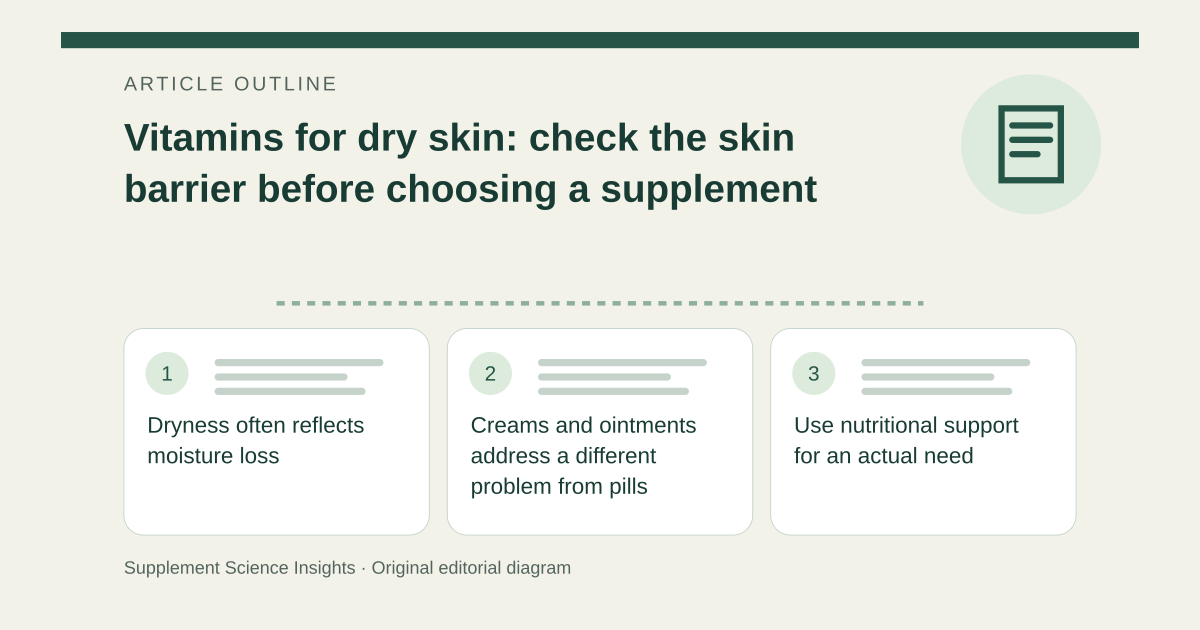
Dryness often reflects moisture loss
AAD notes that low humidity and indoor heating can dry the skin. This does not diagnose inadequate vitamin intake. Consider the environment and skin-care routine alongside the distribution, severity and duration of symptoms. [1]
Creams and ointments address a different problem from pills
AAD recommends moisturizers and notes that creams and ointments often work better than lotions for very dry skin. They help retain moisture at the skin surface. A supplement cannot be assumed to provide the same local barrier effect. [1]
Use nutritional support for an actual need
For healthy adults without deficiencies, AAD recommends obtaining skin-related nutrients from a balanced diet. A restrictive diet or suspected deficiency may justify a clinical nutrition review, but dryness alone cannot identify which nutrient or dose to replace. [2]
Persistent or severe dryness needs examination
If appropriate skin care is not helping, a dermatologist can assess other causes and treatment needs. Dryness associated with cancer treatment or significant skin damage deserves medical attention. Do not keep escalating vitamin doses while an untreated skin condition persists. [1]
Separate two goals in a practical plan
Imagine hands become dry during winter while food intake is adequate. Review moisturizing and exposure first. If dietary restriction is also present, address that separately rather than assuming a beauty capsule treats both issues. [1][2]
| Observation or claim | Useful response |
|---|---|
| Winter dryness | Review humidity and barrier care |
| Restricted diet | Assess nutritional adequacy |
| Persistent symptoms | Consider dermatology assessment |
Sources for this article
- Dry skin: Overview
Source consulted: 2026-09-20. This is a reference resource, not a claim that we conducted the studies or tested a product. - Should I take vitamins or supplements for my skin?
Source consulted: 2026-09-20. This is a reference resource, not a claim that we conducted the studies or tested a product.