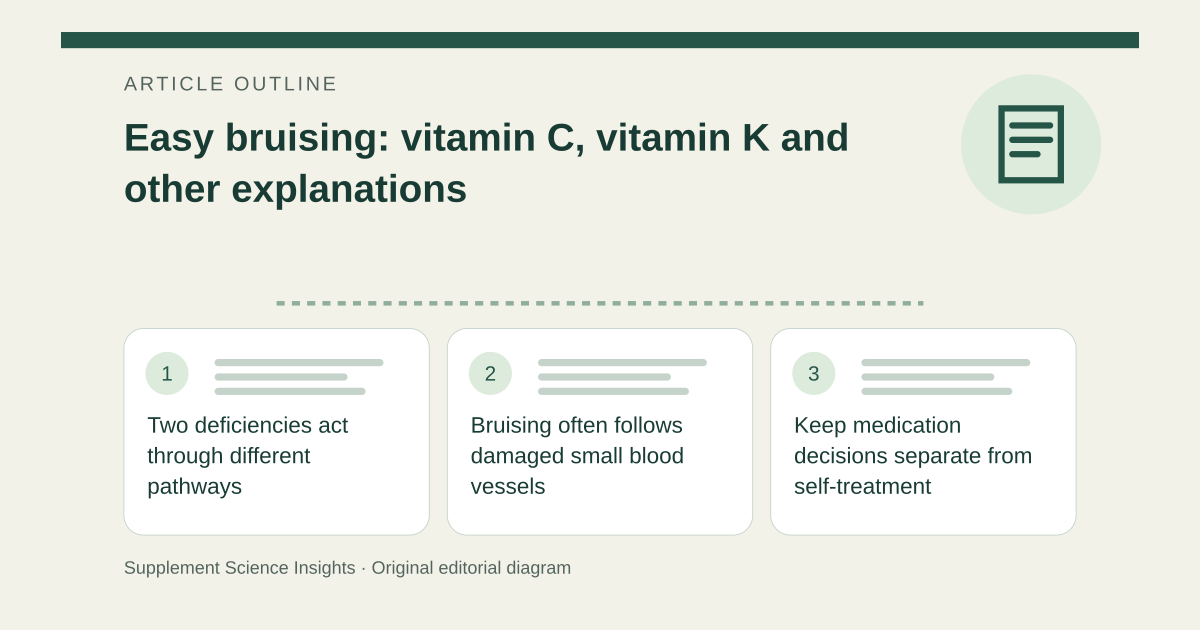
Two deficiencies act through different pathways
Vitamin C deficiency impairs collagen formation and can produce bruising and poor wound healing in scurvy. Severe vitamin K deficiency reduces normal clotting function. Clinically significant K deficiency is rare in adults; neither explanation should be inferred from one bruise. [1][2]
Bruising often follows damaged small blood vessels
A bruise can occur when an injury lets blood leak into nearby tissue. MedlinePlus advises contacting a clinician for bruising without an injury or other explanation. Severe pressure or pain in a swollen bruised area needs urgent assessment. The pattern and history matter more than the color of a single mark. [3]
Keep medication decisions separate from self-treatment
Imagine new unexplained bruises appear while someone uses warfarin. Vitamin K changes can alter its action, so adding K without the prescribing team is not a safe diagnostic experiment. Report the bruising and review medicines, dietary changes and whether testing is needed. [2][3]
| Observation | Interpretation |
|---|---|
| Bruise after an impact | Local vessel injury is plausible |
| Unexplained recurrent bruises | Seek assessment |
| Warfarin plus a new K supplement | Requires clinician coordination |
Sources for this article
- Vitamin C - Health Professional Fact Sheet
Source consulted: 2026-09-20. This is a reference resource, not a claim that we conducted the studies or tested a product. - Vitamin K - Health Professional Fact Sheet
Source consulted: 2026-09-20. This is a reference resource, not a claim that we conducted the studies or tested a product. - Bruise: MedlinePlus Medical Encyclopedia
Source consulted: 2026-09-20. This is a reference resource, not a claim that we conducted the studies or tested a product.