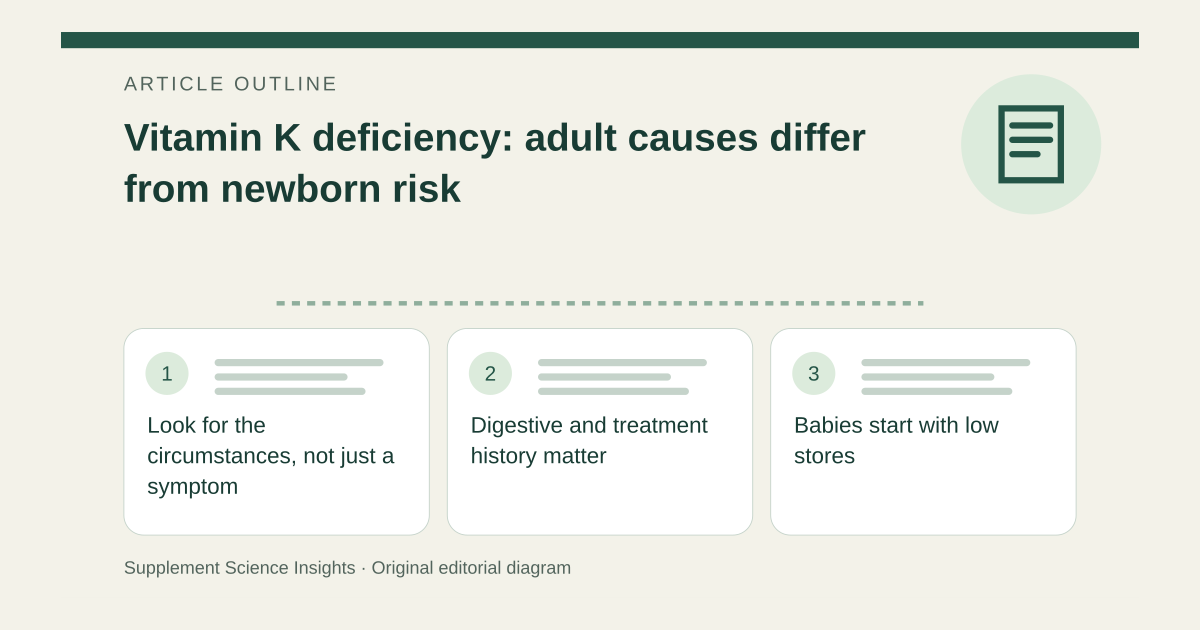
Look for the circumstances, not just a symptom
ODS describes clinically significant vitamin K deficiency in adults as rare and usually associated with malabsorption disorders or medicines that affect vitamin K. Severe deficiency can cause bleeding because vitamin-K-dependent clotting activity falls. [1]
Bruising or bleeding alone does not identify this cause. Other disorders and medicines can produce similar findings, so taking vitamin K without assessment may miss the reason for the symptom. [1]
Digestive and treatment history matter
Fat malabsorption can affect vitamin K availability. ODS identifies conditions such as cystic fibrosis, celiac disease and short bowel syndrome among relevant contexts. Medicines that interfere with absorption or vitamin K action can add to the concern. [1]
Antibiotic use can affect vitamin-K-producing gut bacteria, but the fact sheet does not recommend supplements for every short course. Prolonged use with poor intake presents a different question from routine brief treatment. [1]
Babies start with low stores
CDC explains that little vitamin K crosses the placenta, newborn intestinal bacteria are not yet supplying it, and breast milk contains relatively little. This combination can lead to vitamin K deficiency bleeding, including internal bleeding that is difficult to notice. [2]
The recommended vitamin K shot at birth prevents this risk. An apparently healthy baby or absence of warning signs does not establish that prophylaxis is unnecessary. [2]
Distinguish two clinical questions
Imagine an adult with a malabsorption condition asks about vitamin K after reading newborn information. The same nutrient is involved, but the causes, preventive strategy and clinical management differ.
The adult’s digestive history and medicines need review. The newborn recommendation should not be repurposed as an adult supplement regimen.
| Point | Interpretation |
|---|---|
| Adult with malabsorption | Assess absorption and medicines |
| Newborn with low stores | Use established birth prophylaxis |
| Unexplained bleeding | Do not diagnose by symptom alone |
Bleeding needs assessment
A suspected deficiency should be evaluated in its clinical setting, including the possibility of other causes. This page does not provide a dose for unexplained bruising or bleeding. [1][2]
For newborn prevention, discuss the vitamin K shot with the birth team before delivery rather than waiting for symptoms. CDC notes that serious bleeding can occur without warning. [1][2]
Sources for this article
- NIH ODS — Vitamin K: Health Professional Fact Sheet
Source consulted: 2026-09-17. This is a reference resource, not a claim that we conducted the studies or tested a product. - CDC — About Vitamin K Deficiency Bleeding
Source consulted: 2026-09-17. This is a reference resource, not a claim that we conducted the studies or tested a product.