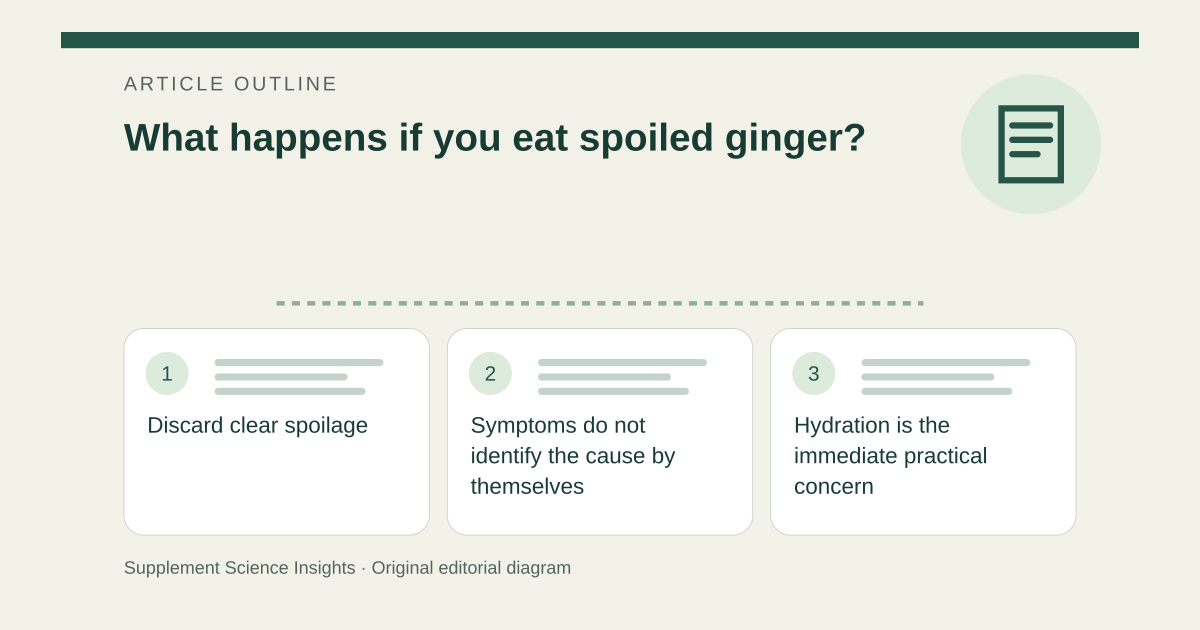
Discard clear spoilage
Mold, soft rot, slime and an abnormal odor are reasons to discard ginger. A dry exterior or a natural color variation is a different observation, but appearance cannot certify freedom from contamination. Safe storage reduces risk without creating a guarantee. [1]
Symptoms do not identify the cause by themselves
Foodborne illness can involve vomiting or diarrhea, but strong ginger can also cause irritation and digestive discomfort without an infection. Timing, other foods and other symptoms matter; do not diagnose a specific pathogen from the spice involved. [2][3]
Hydration is the immediate practical concern
For vomiting or diarrhea, take small tolerated sips and use appropriate rehydration advice. NIDDK recommends oral rehydration solutions for people with significant fluid losses or higher vulnerability. Do not make infant formula weaker or replace needed fluids with an untested herbal preparation. [2][4]
Seek help when the illness is concerning
Imagine a person cannot keep fluids down after eating suspect food. Seek medical advice rather than waiting for ginger to neutralize it. Blood in vomit or stool, severe pain, marked dehydration or worsening illness requires prompt assessment. [4]
| Finding | Action |
|---|---|
| Visible mold or rot | Discard |
| No symptoms yet | Do not taste-test again |
| Vomiting or diarrhea | Hydration and severity assessment |
| Cannot keep fluids down | Seek medical advice |
Sources for this article
- Storing Food for Safety and Quality — Pacific Northwest Extension PNW612
Source consulted: 2026-09-21. This is a reference resource, not a claim that we conducted the studies or tested a product. - Treatment for Food Poisoning - NIDDK
Source consulted: 2026-09-21. This is a reference resource, not a claim that we conducted the studies or tested a product. - Ginger: Usefulness and Safety | NCCIH
Source consulted: 2026-09-21. This is a reference resource, not a claim that we conducted the studies or tested a product. - Diarrhoea and vomiting - NHS
Source consulted: 2026-09-21. This is a reference resource, not a claim that we conducted the studies or tested a product.