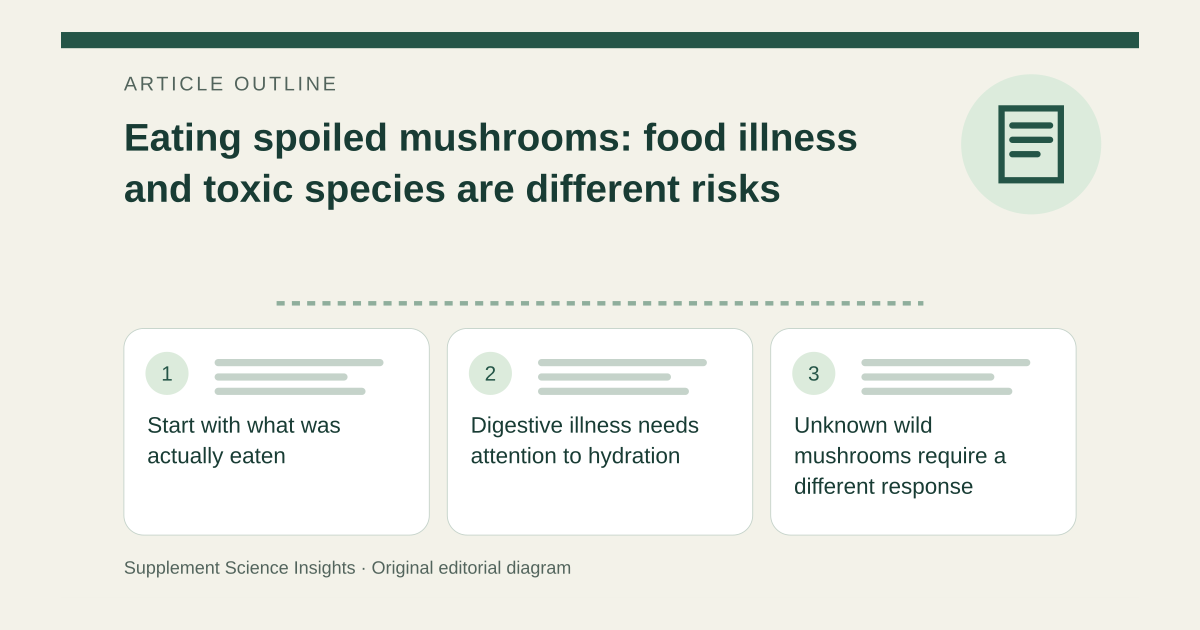
Start with what was actually eaten
Record whether the mushrooms came from a labeled food package, a restaurant or foraging, and whether there were abnormal odors, slime or other changes. Food-handling history and species identity answer different questions. Calling a mushroom old does not rule out an identification problem. [1][2]
Digestive illness needs attention to hydration
Food poisoning can involve vomiting or diarrhea. NIDDK emphasizes replacing lost fluids and electrolytes; small sips may be easier with vomiting. Significant dehydration, bloody diarrhea, fever or persistent illness warrants medical advice. Young children and medically vulnerable people need particular care. [3]
Unknown wild mushrooms require a different response
NC Poison Control advises calling immediately and not waiting for symptoms after ingestion. Some mushroom toxins can cause severe neurological or liver effects, and cooking does not remove all toxins. General home food-poisoning advice is not a substitute for toxic-mushroom assessment. [2]
Keep identifying information and avoid improvised treatment
Save the package or remaining mushroom material for professionals. NC Poison Control recommends a labeled paper bag in the refrigerator for remaining specimens intended for identification. In the United States call 1-800-222-1222; do not induce vomiting. Collapse, seizure or breathing difficulty requires emergency services. [2][4]
Do not use lack of symptoms to clear the rest of a meal
Imagine several people share a questionable mushroom dish but only one becomes ill initially. Different symptom timing does not verify the food for everyone else. Stop serving it and obtain advice matched to the exposure, particularly if identity is uncertain. [2][3]
| Information | Why it matters |
|---|---|
| Source and identity | Distinguish food spoilage from toxic species |
| Amount and timing | Supports exposure assessment |
| Symptoms and remaining material | Guides care and identification |
Sources for this article
- Proper Handling of Fresh Mushrooms
Source consulted: 2026-09-21. This is a reference resource, not a claim that we conducted the studies or tested a product. - Mushrooms
Source consulted: 2026-09-21. This is a reference resource, not a claim that we conducted the studies or tested a product. - Treatment for Food Poisoning - NIDDK
Source consulted: 2026-09-21. This is a reference resource, not a claim that we conducted the studies or tested a product. - Poison Control: First aid guidelines
Source consulted: 2026-09-21. This is a reference resource, not a claim that we conducted the studies or tested a product.