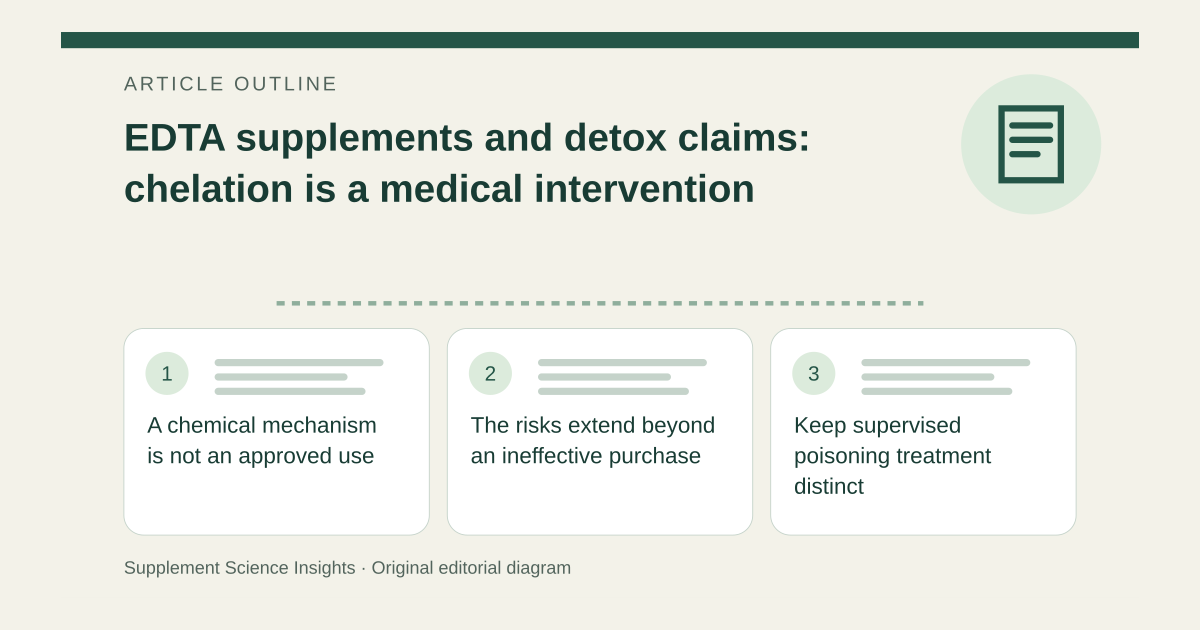
A chemical mechanism is not an approved use
EDTA is associated with metal-binding chemistry. FDA warns that over-the-counter chelation products marketed for detoxification or serious diseases have not been approved for those uses. A manufacturer cannot establish safety and effectiveness merely by pointing to an ingredient that also appears in a medicine. [1]
The risks extend beyond an ineffective purchase
FDA identifies serious risks from chelation, including dehydration, kidney failure and death. Unproven products can also delay appropriate assessment and treatment. Suspected metal exposure needs an appropriate exposure history and medical testing, not a sales-linked test followed automatically by a detox course. [1]
Keep supervised poisoning treatment distinct
Imagine someone hears that a prescription chelator is used for metal poisoning and concludes an oral EDTA product is suitable for general wellness. That changes the diagnosis, product, route and supervision. Seek medical advice for a credible exposure rather than copying a treatment principle into a self-directed supplement routine. [1]
| Name or claim | What it means |
|---|---|
| Metal-binding mechanism | Not proof of general detox benefit |
| Approved chelation | Prescription-supervised treatment |
| OTC treatment promise | Not established by ingredient similarity |
Sources for this article
- Questions and Answers on Unapproved Chelation Products | FDA
Source consulted: 2026-09-20. This is a reference resource, not a claim that we conducted the studies or tested a product.