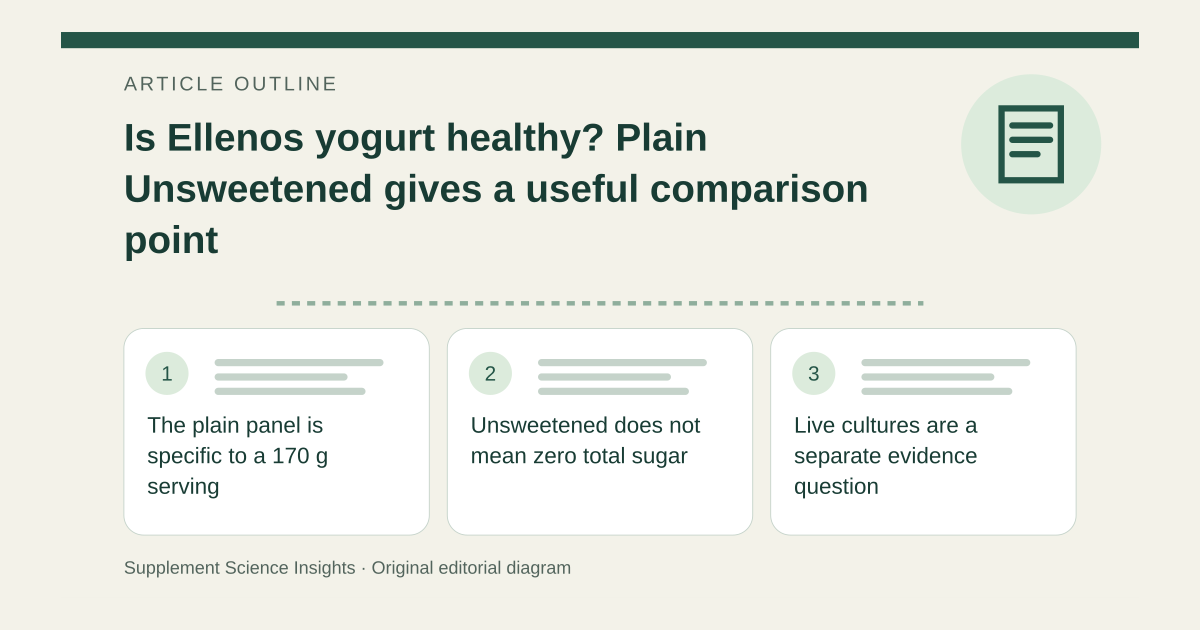
The plain panel is specific to a 170 g serving
The inspected page lists 190 calories, 15 g protein, 8 g fat and 9 g total sugars per three-quarter cup, or 170 g. Its ingredients include milk, milk protein concentrate, natural flavor and live active cultures. It contains milk and is unsuitable for someone who must avoid that allergen. [1]
Unsweetened does not mean zero total sugar
Total sugars include sugars naturally present in milk. Compare added sugars separately when choosing between plain and flavored yogurt, and use equal portions. Do not transfer the plain product’s panel to a honey, fruit or dessert-style variety. [2][1]
Live cultures are a separate evidence question
The ingredient list identifies live active cultures, but the inspected page does not establish a specific treatment outcome or standardized probiotic dose. NIH emphasizes that probiotic effects depend on the organism and use. Protein content and a live-culture statement answer different questions. [3][1]
Count toppings and the amount served
Imagine using 170 g of plain yogurt with fruit and granola. The yogurt contributes its listed nutrients, while the toppings add their own. Decide whether the complete meal fits your needs instead of applying one healthy-or-unhealthy label to the brand. [2]
| Check | Interpretation |
|---|---|
| Plain, 170 g | 190 calories and 15 g protein |
| Total sugar | Not the same as added sugar |
| Flavored pot or toppings | Use the complete serving’s nutrition |
Sources for this article
- Plain Unsweetened - Ellenos Greek Yogurt
Source consulted: 2026-09-20. This is a reference resource, not a claim that we conducted the studies or tested a product. - How to Understand and Use the Nutrition Facts Label | FDA
Source consulted: 2026-09-20. This is a reference resource, not a claim that we conducted the studies or tested a product. - Probiotics - Health Professional Fact Sheet
Source consulted: 2026-09-20. This is a reference resource, not a claim that we conducted the studies or tested a product.