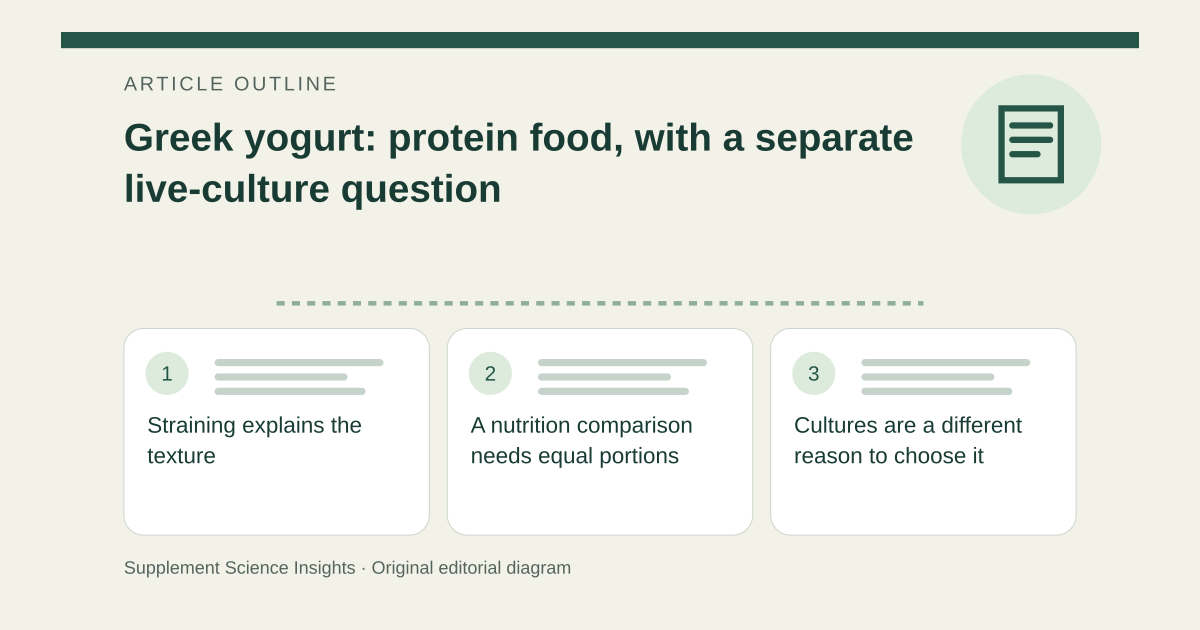
Straining explains the texture
Greek yogurt is made by removing some whey from yogurt, producing a thicker food. Dairy yogurt can supply protein and calcium. The word Greek alone does not specify the grams of protein, fat level or sugar content in every container. [1]
A nutrition comparison needs equal portions
Read the serving size before comparing two cups. Plain and sweetened varieties may have different added-sugar amounts, and full-fat and nonfat versions differ in fat. Plant-based Greek-style products require their own panel; the name does not guarantee dairy-equivalent nutrients. [2][1]
Cultures are a different reason to choose it
Look for live-culture information, but do not equate thickness or high protein with greater probiotic effectiveness. Imagine buying yogurt primarily for breakfast protein: choose a suitable portion from the label. If seeking help with a particular digestive problem, the relevant strain and evidence matter more than a Greek-style name. [3]
| Situation | Interpretation |
|---|---|
| Thick texture | A style and processing feature |
| Protein goal | Compare grams per actual serving |
| Digestive-treatment claim | Needs relevant organism evidence |
Sources for this article
- Yogurt • The Nutrition Source
Source consulted: 2026-09-20. This is a reference resource, not a claim that we conducted the studies or tested a product. - How to Understand and Use the Nutrition Facts Label | FDA
Source consulted: 2026-09-20. This is a reference resource, not a claim that we conducted the studies or tested a product. - Probiotics - Health Professional Fact Sheet
Source consulted: 2026-09-20. This is a reference resource, not a claim that we conducted the studies or tested a product.