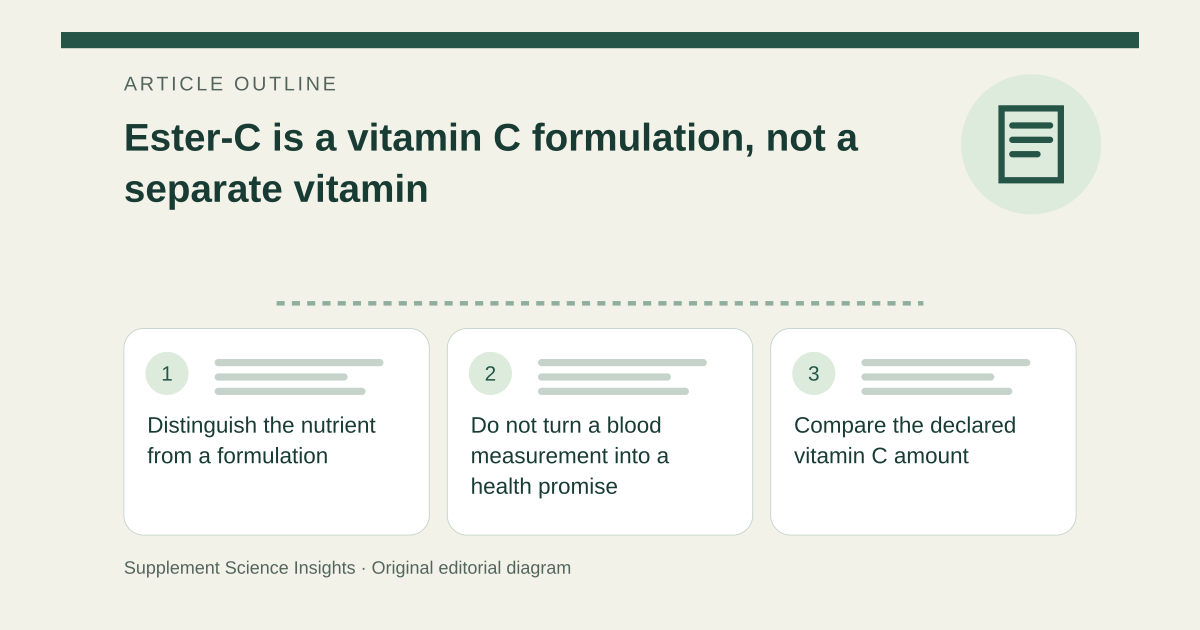
Distinguish the nutrient from a formulation
Vitamin C is the nutrient, commonly supplied as ascorbic acid. NIH ODS describes Ester-C as a combination that includes calcium ascorbate and several related compounds. It therefore contains a form of vitamin C; it is not an additional essential vitamin with its own dietary requirement. [1]
Do not turn a blood measurement into a health promise
The ODS summary describes limited comparative research: reported differences in some measurements do not consistently establish an advantage over ascorbic acid. A change in a vitamin concentration is not automatically proof of fewer infections, faster recovery or superior results for every user. This page relies on the government summary, not an independent appraisal of those individual trials. [1]
Compare the declared vitamin C amount
Imagine two products each declare 500 mg vitamin C per serving, one as ascorbic acid and one using an Ester-C formulation. Each contributes the stated 500 mg to vitamin C intake; the formulation name does not double the amount or create a separate upper limit. Check serving size and additional ingredients when comparing actual labels. [1]
| Hypothetical panel | Count toward vitamin C |
|---|---|
| Vitamin C 500 mg as ascorbic acid | 500 mg |
| Vitamin C 500 mg in an Ester-C formulation | 500 mg |
| Both taken together | 1,000 mg before other sources |
Sources for this article
- Vitamin C - Health Professional Fact Sheet
Source consulted: 2026-09-20. This is a reference resource, not a claim that we conducted the studies or tested a product.