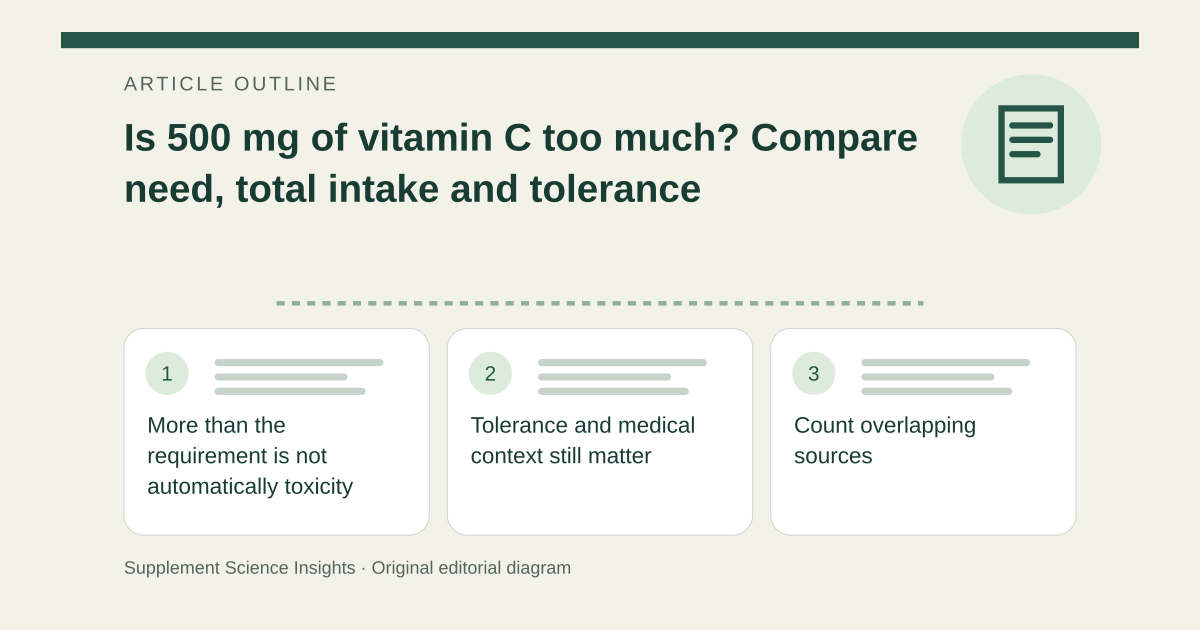
More than the requirement is not automatically toxicity
For adults aged 19 and older, the U.S. vitamin C RDA is 90 mg for men and 75 mg for women; pregnancy and lactation have different needs. A 500 mg supplement exceeds those usual nutritional requirements. The adult upper limit is 2,000 mg per day from all sources, so 500 mg alone is below it. Neither figure is a recommendation to take a supplement. [1]
Tolerance and medical context still matter
High vitamin C intake can cause diarrhea, nausea or abdominal cramps. Kidney disorders and hereditary hemochromatosis can change the assessment of high-dose use. A number below the adult upper limit is not a guarantee of tolerance, and children have lower age-specific limits. Existing treatment and other supplements also need to be considered. [1]
Count overlapping sources
Imagine someone takes a 500 mg tablet and a multivitamin containing 100 mg. That is 600 mg supplemental vitamin C before food and drinks. Counting only the separate tablet understates exposure. If no deficiency or other reason has been identified, exceeding the RDA does not itself establish an additional clinical benefit. [1]
| Hypothetical source | Vitamin C |
|---|---|
| Separate tablet | 500 mg |
| Multivitamin | 100 mg |
| Supplement subtotal before food | 600 mg |
Sources for this article
- Vitamin C - Health Professional Fact Sheet
Source consulted: 2026-09-20. This is a reference resource, not a claim that we conducted the studies or tested a product.