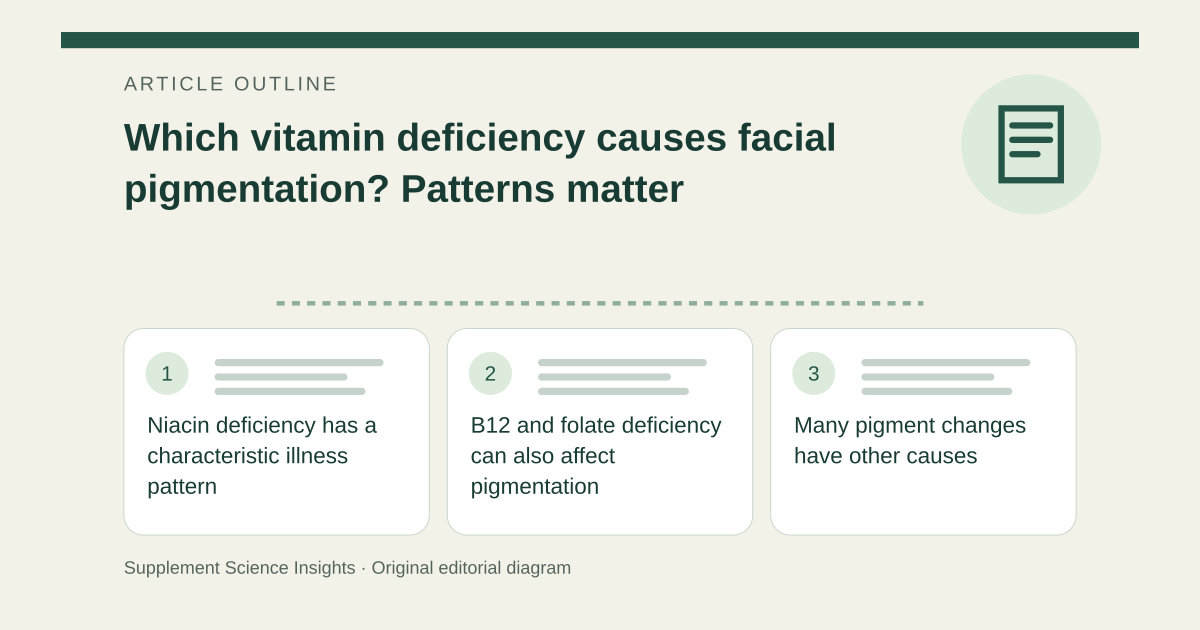
Niacin deficiency has a characteristic illness pattern
NIH describes pellagra from severe niacin deficiency as a sun-sensitive, roughened and pigmented skin eruption. It may occur with mouth, digestive and neurological symptoms. That is a systemic deficiency disorder, not a synonym for every dark spot or uneven skin tone. [1]
B12 and folate deficiency can also affect pigmentation
DermNet describes diffuse or symmetrical hyperpigmentation associated with B9 or B12 deficiency, including possible facial involvement and changes at other sites. Other findings such as mouth inflammation can help inform assessment. A photograph alone cannot confirm the nutrient responsible. [2]
Many pigment changes have other causes
DermNet lists melasma, post-inflammatory changes and drug-related pigmentation among numerous alternatives. Darkening after acne or an irritating product is a different clinical pattern from a widespread deficiency-related eruption. A new or changing lesion should be assessed rather than automatically treated with a vitamin blend. [3]
Replacement and cosmetic treatment are different decisions
When deficiency is established, treatment should address both the nutrient and its cause. For someone without deficiency, an oral supplement cannot be assumed to correct facial pigmentation. AAD recommends assessing whether a supplement is actually needed rather than treating all skin concerns as nutritional gaps. [4][1]
Compare the pattern before choosing a remedy
Imagine one person develops dark patches after acne while another has diffuse darkening with a sore tongue and a restrictive diet. Both may use the word pigmentation, but they need different assessments. The second history makes a nutritional review more relevant without establishing a diagnosis by itself. [3][2]
| Finding | Why context matters |
|---|---|
| Sun-sensitive rough dark rash | Can occur in pellagra |
| Diffuse pigment and mouth changes | May prompt B-vitamin assessment |
| Dark marks after inflammation | May have a local skin explanation |
| Unexplained changing patch | Needs assessment rather than vitamin guessing |
Sources for this article
- Niacin - Health Professional Fact Sheet
Source consulted: 2026-09-21. This is a reference resource, not a claim that we conducted the studies or tested a product. - Skin signs of gastrointestinal disease
Source consulted: 2026-09-21. This is a reference resource, not a claim that we conducted the studies or tested a product. - Skin pigmentation
Source consulted: 2026-09-21. This is a reference resource, not a claim that we conducted the studies or tested a product. - Should I take vitamins or supplements for my skin?
Source consulted: 2026-09-21. This is a reference resource, not a claim that we conducted the studies or tested a product.