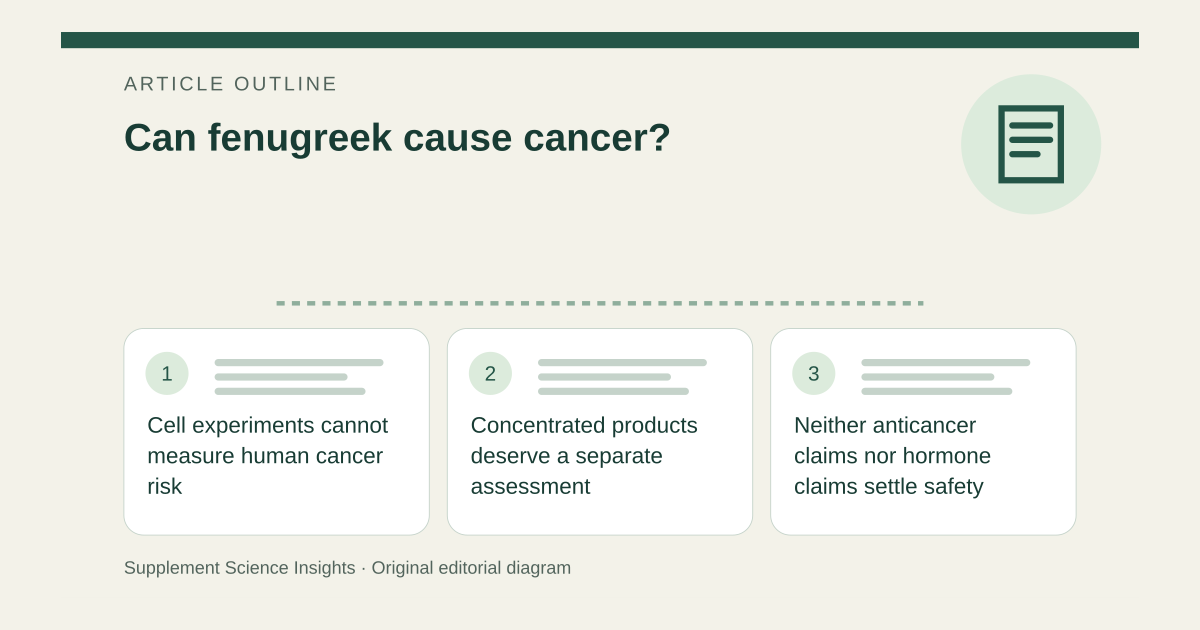
Cell experiments cannot measure human cancer risk
MSK describes estrogen-receptor activity and breast-cancer-cell stimulation in laboratory work. Such experiments identify a possible biological concern, but cannot tell us whether eating a spice causes cancer or quantify risk from a particular capsule. [1]
Concentrated products deserve a separate assessment
NCCIH distinguishes food amounts from larger supplemental amounts. Extracts can differ from the seed used in cooking, and evidence is insufficient for many health claims. A general food-safety statement does not establish compatibility with cancer treatment. [2]
Neither anticancer claims nor hormone claims settle safety
A substance can show different effects across cells, concentrations and preparations. MSK advises caution with hormone-sensitive cancers and notes a potential interaction with cyclophosphamide based on animal research. Neither finding should be recast as a proven human treatment effect. [1]
Bring the exact product to the treating team
Imagine someone receiving breast-cancer treatment considers fenugreek for hot flashes. Review the extract and all medicines with the oncology team before use. Do not substitute a laboratory anticancer claim for evidence about that person and treatment. [1]
| Evidence | Cannot establish |
|---|---|
| Cell stimulation | Human incidence rate |
| Anticancer cell experiment | Cancer treatment benefit |
| Food-level use | Supplement compatibility |
| Hormone-sensitive diagnosis | Requires treatment-specific review |
Sources for this article
- Fenugreek | Memorial Sloan Kettering Cancer Center
Source consulted: 2026-09-21. This is a reference resource, not a claim that we conducted the studies or tested a product. - Fenugreek: Usefulness and Safety | NCCIH
Source consulted: 2026-09-21. This is a reference resource, not a claim that we conducted the studies or tested a product.