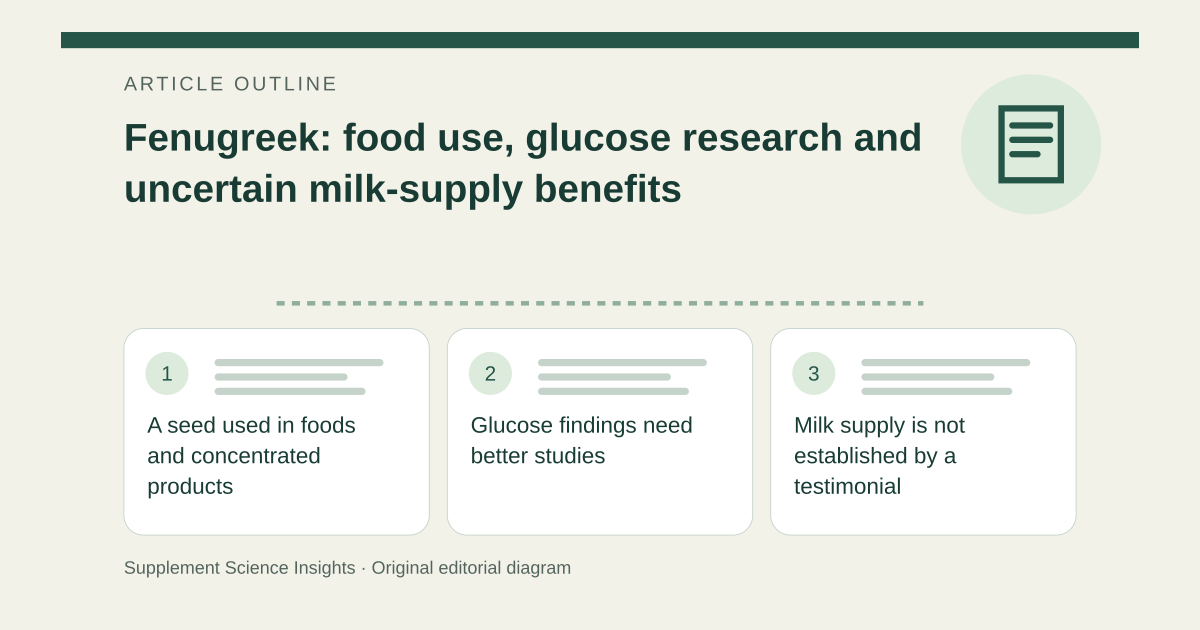
A seed used in foods and concentrated products
Fenugreek, Trigonella foenum-graecum, is used as a spice and sold in powders, teas and extracts. Culinary amounts and a planned concentrated supplement regimen are different exposures. A history of food use should not be presented as proof that larger doses are harmless. [1]
The exact preparation also matters when reading research. A seed powder, an extract and a multi-herb lactation product cannot automatically borrow each other's findings. [1]
Glucose findings need better studies
NCCIH describes research suggesting possible glucose-lowering effects in type 2 diabetes, but many studies are not high quality. Evidence for menstrual cramps and other uses is also insufficient for firm conclusions. [1]
A change in a glucose measure does not establish reduced complications or a safe replacement for prescribed treatment. The comparison, background medication and preparation must remain part of the result rather than disappearing from a supplement headline. [1]
Milk supply is not established by a testimonial
Studies of fenugreek for increasing milk supply have mixed results. A before-and-after account cannot reliably separate a supplement effect from feeding changes, time, support or other interventions. [1]
If milk transfer or supply is a concern, assessment of feeding and infant growth provides more useful information than a product promise alone. An herbal preparation should not postpone help with a feeding problem, and maternal tolerance does not establish infant safety. [1]
A glucose study also needs a clear account of background medicines and dietary changes. If those differ between groups, attributing the entire observed difference to fenugreek would overstate what the comparison can establish. [1]
Pregnancy and low blood glucose are key concerns
Fenugreek in amounts above ordinary food exposure is not considered safe during pregnancy and has been linked to birth-defect concerns. Large doses can cause a harmful fall in blood glucose. Digestive symptoms and allergic reactions, sometimes serious, can also occur. [1]
Safety information for supplemental amounts during breastfeeding is limited. People using diabetes medicines or other treatments should discuss the complete product with a clinician rather than assuming that a natural ingredient cannot interact. [1]
Separate a change from its cause
Imagine a fictional parent starts a three-herb product on the same day that feeding frequency and pumping technique change. A later increase in measured milk does not isolate fenugreek's effect.
A useful record notes all changes and how the outcome was measured. The example is not a lactation protocol or a reason to withhold support; it shows why one personal sequence cannot establish the efficacy of a particular ingredient.
| Hypothetical change | Interpretation |
|---|---|
| Herbal blend started | One of several changes |
| Feeding and pumping also changed | Ingredient effect not isolated |
| Milk measurement increased | Observation, not proof of cause |
The clinical setting defines the next question
For food use, consider the preparation as part of the diet. For glucose control, review treatment and monitoring with the care team. For feeding concerns, seek appropriate feeding assessment. This overview does not recommend a medicinal dose or a commercial lactation formula.
Sources for this article
- NCCIH — Fenugreek: Usefulness and Safety
Source consulted: 2026-09-17. This is a reference resource, not a claim that we conducted the studies or tested a product.