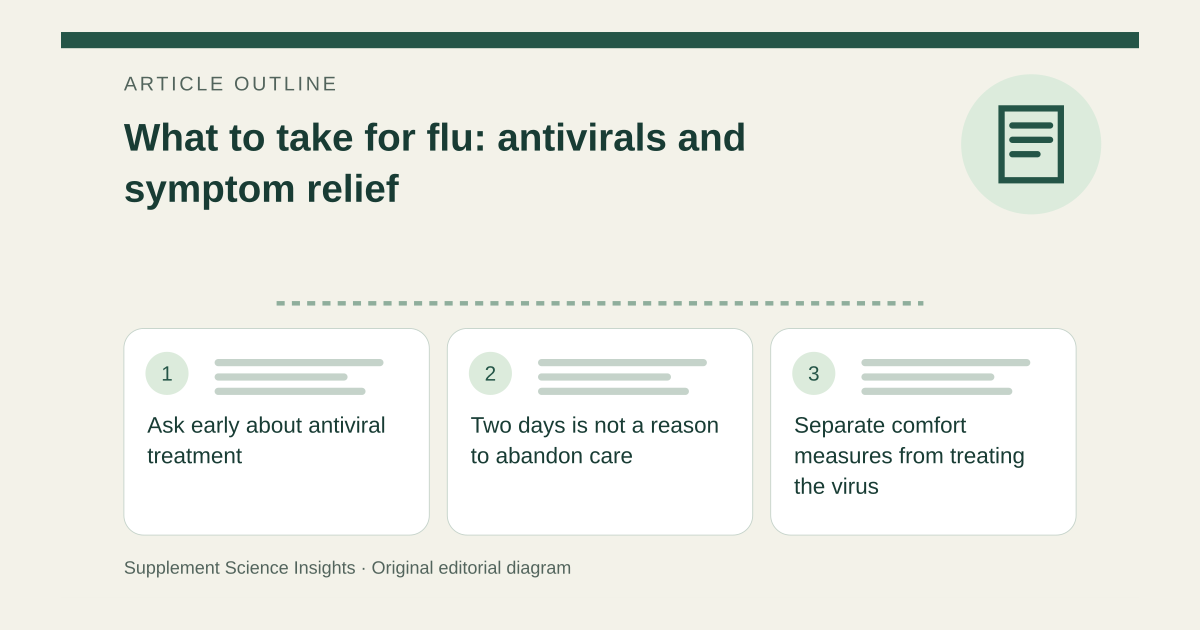
Ask early about antiviral treatment
CDC says antiviral medicines work best when started within two days of symptom onset. People at higher risk, including pregnant people and those with certain chronic conditions, should contact a clinician promptly. Not everyone with mild influenza needs an antiviral prescription. [1]
Two days is not a reason to abandon care
Treatment can still benefit hospitalized people and those with severe illness or increased complication risk when started later. A clinician chooses the appropriate medicine and formulation. Do not delay contacting care while trying a supplement first. [1]
Separate comfort measures from treating the virus
Rest and fluids support recovery, while suitable fever or pain medicines may ease symptoms. Check combination products for duplicate ingredients and ask a pharmacist about suitability. Antibiotics do not treat influenza viruses; a separate bacterial complication is a different clinical question. [2][1]
Do not replace a time-sensitive treatment with a wellness claim
Imagine a high-risk adult has symptoms for one day and considers an immune blend. Prompt clinical advice is more relevant than comparing supplement labels. Vaccination is prevention, whereas antiviral treatment addresses an infection already underway; neither role is established by a generic immunity claim. [1][3]
| Situation | Practical response |
|---|---|
| Early symptoms and high risk | Contact care promptly |
| More than two days | Treatment may still be indicated |
| Antibiotic | Does not treat influenza virus |
| Immune blend | Not antiviral replacement |
Sources for this article
- Common cold - NHS
Source consulted: 2026-09-21. This is a reference resource, not a claim that we conducted the studies or tested a product. - Dietary Supplements: What You Need to Know - Consumer
Source consulted: 2026-09-21. This is a reference resource, not a claim that we conducted the studies or tested a product.