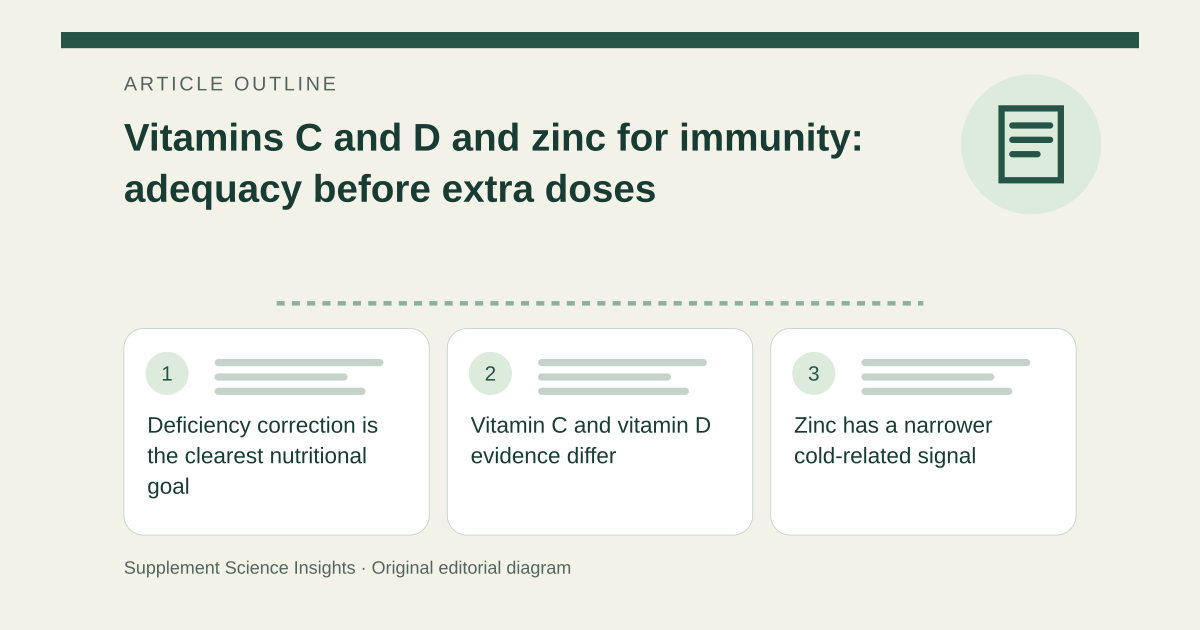
Deficiency correction is the clearest nutritional goal
NIH ODS explains that inadequate vitamin or mineral intake can impair immune function. Supplements can help meet requirements when a shortfall is identified. In most cases, extra intake without deficiency does not prevent infection or speed recovery. Zinc is a mineral, even when grouped with vitamins in marketing. [1]
Vitamin C and vitamin D evidence differ
ODS describes possible modest cold-duration effects from regular vitamin C and mixed respiratory-infection prevention findings for vitamin D. These are not interchangeable benefits, and vitamin D is not established as an acute respiratory-infection treatment. A general immune claim obscures those differences. [1]
Zinc has a narrower cold-related signal
NIH summarizes uncertain evidence that zinc may shorten an established cold, while having little or no preventive effect. Its normal immune role does not show that a daily high dose prevents flu, COVID or every seasonal infection. [2]
Healthy habits and specific protection work together
CDC recommends adequate sleep, varied food and physical activity for general immune health. Vaccines serve a different role by training recognition of particular diseases. Supplements should not crowd out those practical measures or management of health conditions that affect immunity. [3]
Check overlap rather than pursuing the highest dose
Imagine an immune drink, multivitamin and separate zinc product all supply the same nutrient. Add their labeled amounts before deciding whether another product is useful. Sustained high zinc can impair immune function and copper status, the opposite of the intended goal. [2]
| Claim | Useful question |
|---|---|
| Contains essential nutrients | Is intake actually inadequate? |
| Shortens an illness | Which infection and preparation? |
| Prevents infection | Was prevention measured? |
| More ingredients or higher doses | What added benefit and risk are demonstrated? |
Sources for this article
- Dietary Supplements for Immune Function and Infectious Diseases - NIH ODS
Source consulted: 2026-09-21. This is a reference resource, not a claim that we conducted the studies or tested a product. - Zinc - Health Professional Fact Sheet
Source consulted: 2026-09-21. This is a reference resource, not a claim that we conducted the studies or tested a product. - Support Your Immune Health | Respiratory Illnesses | CDC
Source consulted: 2026-09-21. This is a reference resource, not a claim that we conducted the studies or tested a product.