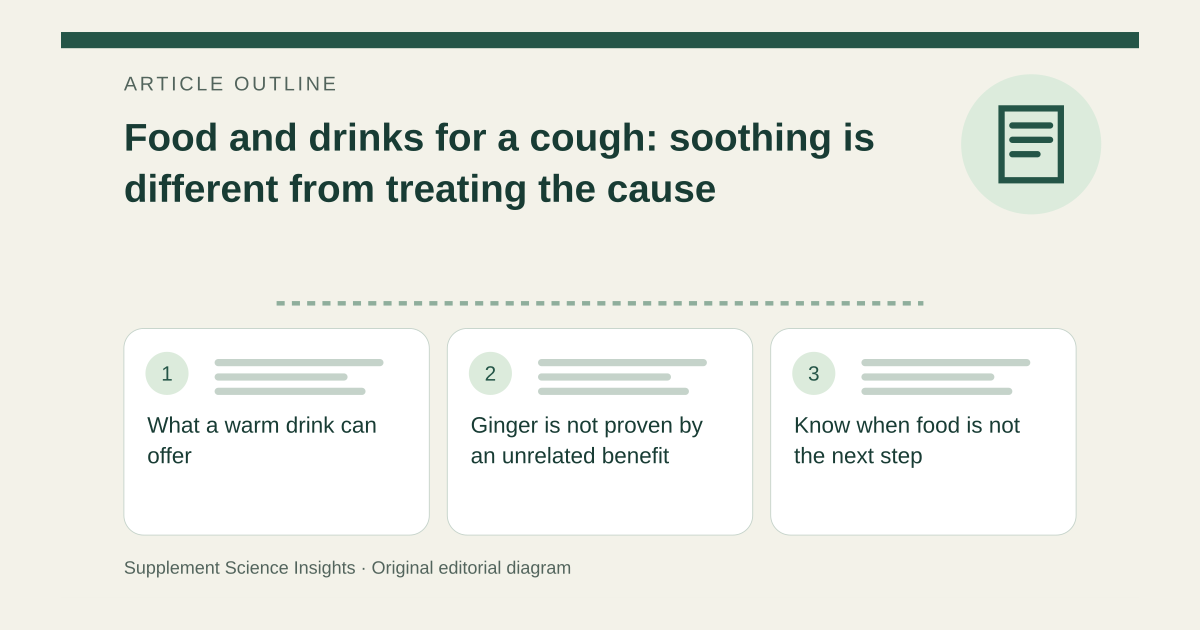
What a warm drink can offer
NHS suggests rest, fluids and, if appropriate, warm lemon and honey. Evidence that honey drinks or herbal remedies ease a cough is limited. Avoid honey in children under one year, and do not give a young child a hot drink. These measures are for comfort rather than a guaranteed cure. [1]
Ginger is not proven by an unrelated benefit
NCCIH describes ginger research mainly in nausea and vomiting, often using supplements rather than food. That evidence does not answer whether ginger soup or tea treats a cough. Oral ginger can also cause heartburn or mouth and throat irritation, so a burning preparation is not automatically soothing. [2]
Know when food is not the next step
A cough lasting more than three weeks needs medical review. Seek urgent assessment for breathing difficulty, chest pain, coughing blood or a rapidly worsening cough. Infection, reflux and allergies can require different approaches; a food remedy does not identify the cause. [1]
Separate comfort from the treatment decision
Imagine warm tea feels pleasant but a cough keeps worsening. Continuing a tolerable drink for comfort is a different decision from postponing assessment. Record how long the cough has lasted and accompanying symptoms rather than adding increasingly concentrated ginger or multiple herbal syrups. [1][2]
| Situation | Next consideration |
|---|---|
| Mild cough and tolerable warm drink | Comfort measure with limited evidence |
| Baby under one year | No honey |
| Breathing trouble or coughing blood | Urgent medical assessment |
Sources for this article
- Cough - NHS
Source consulted: 2026-09-20. This is a reference resource, not a claim that we conducted the studies or tested a product. - Ginger: Usefulness and Safety | NCCIH
Source consulted: 2026-09-20. This is a reference resource, not a claim that we conducted the studies or tested a product.