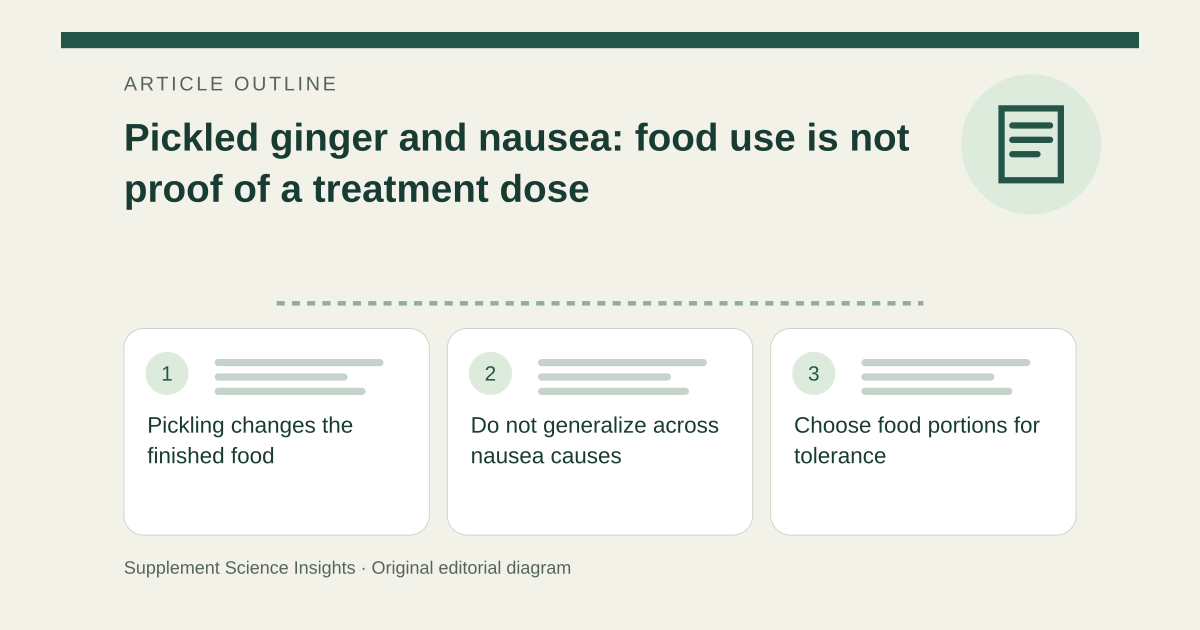
Pickling changes the finished food
A jar of pickled ginger contains its own combination of ginger and pickling ingredients. Assess the current label for details relevant to sodium, sweeteners or dietary preferences. The ginger name does not identify the amount or preparation used in a clinical trial. [1][2]
Do not generalize across nausea causes
NCCIH describes different results for different nausea settings, and most studies tested supplements rather than foods. Eating pickled ginger with a meal therefore should not be described as an established treatment for motion sickness, postoperative nausea or another specific condition without direct evidence. [1]
Choose food portions for tolerance
Imagine a small serving tastes pleasant but a larger one worsens heartburn. More is not necessarily better. Follow the jar’s storage directions and discuss persistent symptoms rather than increasing portions to imitate a supplement dose. Pregnancy-related use also calls for assessment of the actual symptoms and preparation. [1]
| Example | What it means |
|---|---|
| Pickled food | A distinct finished preparation |
| Pleasant flavor | Not a treatment result |
| Larger portion | Can change tolerance |
Sources for this article
- Ginger: Usefulness and Safety | NCCIH
Source consulted: 2026-09-20. This is a reference resource, not a claim that we conducted the studies or tested a product. - Botanical Dietary Supplements Background Information - Consumer
Source consulted: 2026-09-20. This is a reference resource, not a claim that we conducted the studies or tested a product.