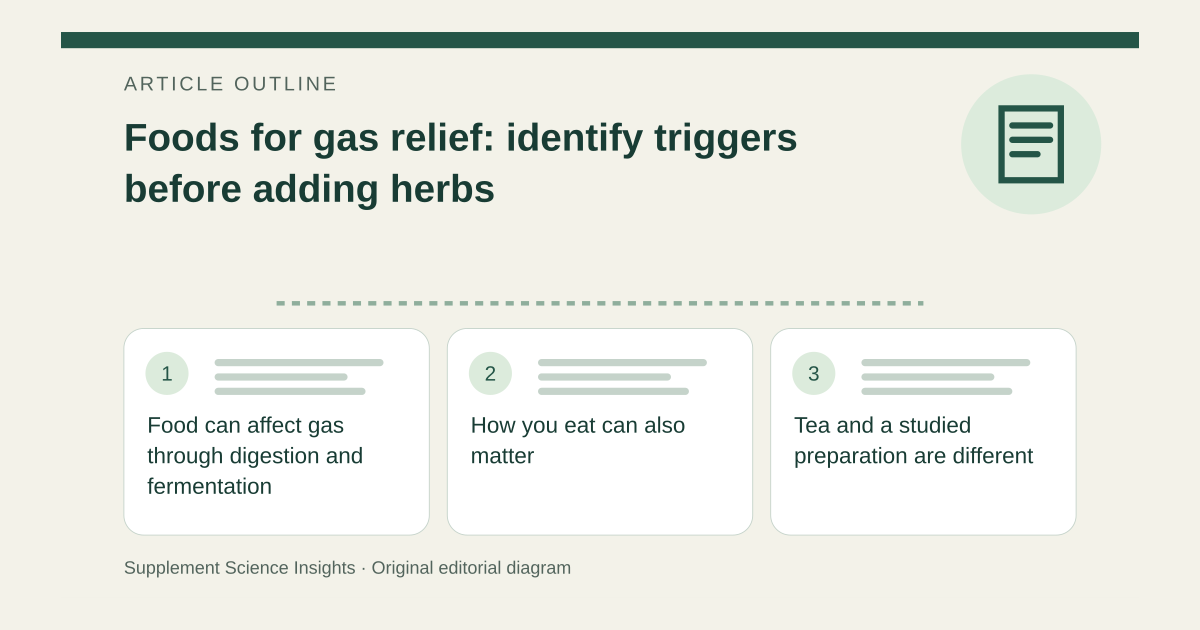
Food can affect gas through digestion and fermentation
NIDDK explains that some carbohydrates reach the large intestine incompletely digested, where bacteria produce gas. Common triggers can include certain fruits, legumes, dairy products and sugar alcohols, but the pattern varies. A trigger list is not an instruction to remove all these nutritious foods permanently. [1]
How you eat can also matter
Eating slowly, sitting for meals and reducing fizzy drinks, gum or drinking through straws may help some people. NIDDK also notes that very high fiber intake can worsen gas for some, and high-fat foods may increase bloating. A large sudden dietary change can make the pattern harder to interpret. [1]
Tea and a studied preparation are different
Peppermint-oil evidence in IBS should not be translated into a guarantee for peppermint tea or every cause of gas. A herb’s reputation does not identify the reason for a person’s symptoms. Persistent troublesome symptoms can justify reviewing possible lactose intolerance, IBS or another cause. [2][1]
Change one likely trigger and keep a useful record
Imagine bloating repeatedly follows a large milk drink but not smaller lactose-free portions. Record the food, amount, timing and symptoms and discuss the pattern with a clinician or dietitian. This is more informative than removing every carbohydrate or assuming a new tea fixed the underlying cause. [1]
| Record | Example |
|---|---|
| Food and portion | Large milk drink |
| Comparison | Smaller lactose-free portion |
| Symptoms and timing | Note the actual response |
Sources for this article
- Eating, Diet, & Nutrition for Gas in the Digestive Tract - NIDDK
Source consulted: 2026-09-20. This is a reference resource, not a claim that we conducted the studies or tested a product. - Peppermint Oil: Usefulness and Safety | NCCIH
Source consulted: 2026-09-20. This is a reference resource, not a claim that we conducted the studies or tested a product.