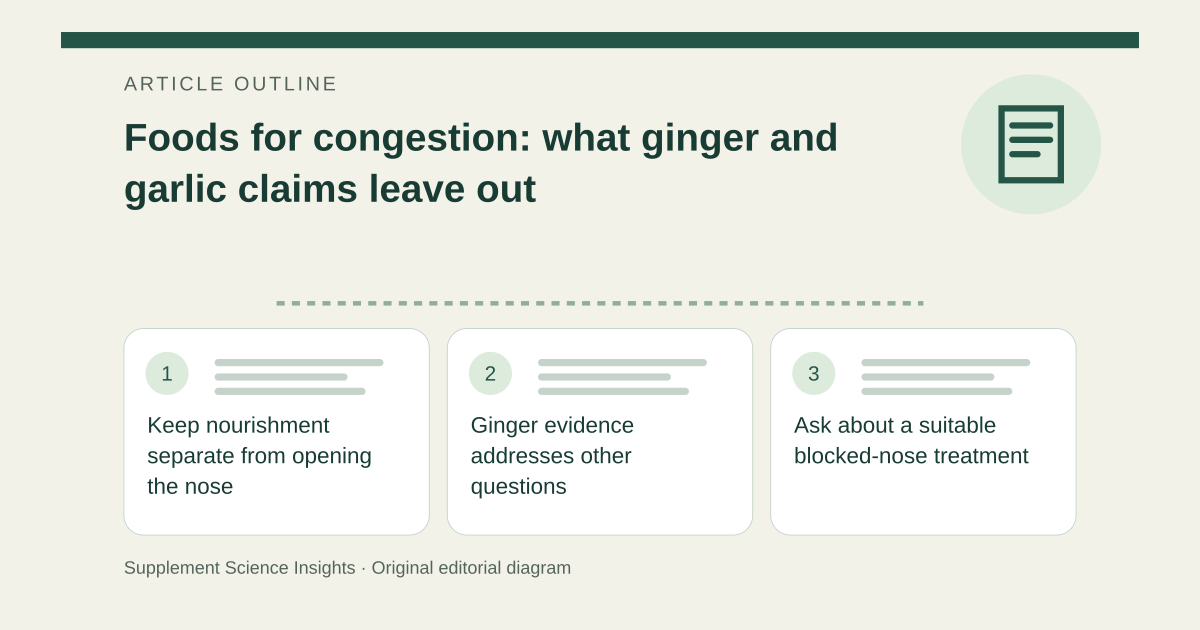
Keep nourishment separate from opening the nose
NHS recommends fluids, rest and healthy food during a cold. It also notes little evidence that garlic, vitamin C or echinacea supplements prevent colds or speed recovery. Feeling comforted by a soup does not show that one ingredient clears nasal swelling or shortens infection. [1]
Ginger evidence addresses other questions
Ginger’s studied uses include several forms of nausea, with much of the research involving supplements. That does not establish that a ginger shot decongests the nose. Heartburn and throat irritation are possible oral side effects, so stronger is not necessarily more comfortable. [2]
Ask about a suitable blocked-nose treatment
A pharmacist can assess appropriate decongestants. NHS cautions that decongestants are unsuitable under age six and that nasal decongestant sprays should not be used longer than a week because symptoms can worsen. Pregnancy and other medicines can affect suitability. [1]
Do not let a food claim obscure worsening illness
Imagine a ginger drink provides warmth but congestion persists. Review the duration and other symptoms instead of treating the sensation as proof of recovery. NHS advises assessment for worsening symptoms, shortness of breath, chest pain or cold symptoms not improving after ten days. [1][2]
| Situation | Next consideration |
|---|---|
| Soup or warm drink | Comfort and fluid intake |
| Concentrated ginger | Nausea evidence is not decongestant evidence |
| Persistent or worsening symptoms | Review the cause and treatment |
Sources for this article
- Common cold - NHS
Source consulted: 2026-09-20. This is a reference resource, not a claim that we conducted the studies or tested a product. - Ginger: Usefulness and Safety | NCCIH
Source consulted: 2026-09-20. This is a reference resource, not a claim that we conducted the studies or tested a product.