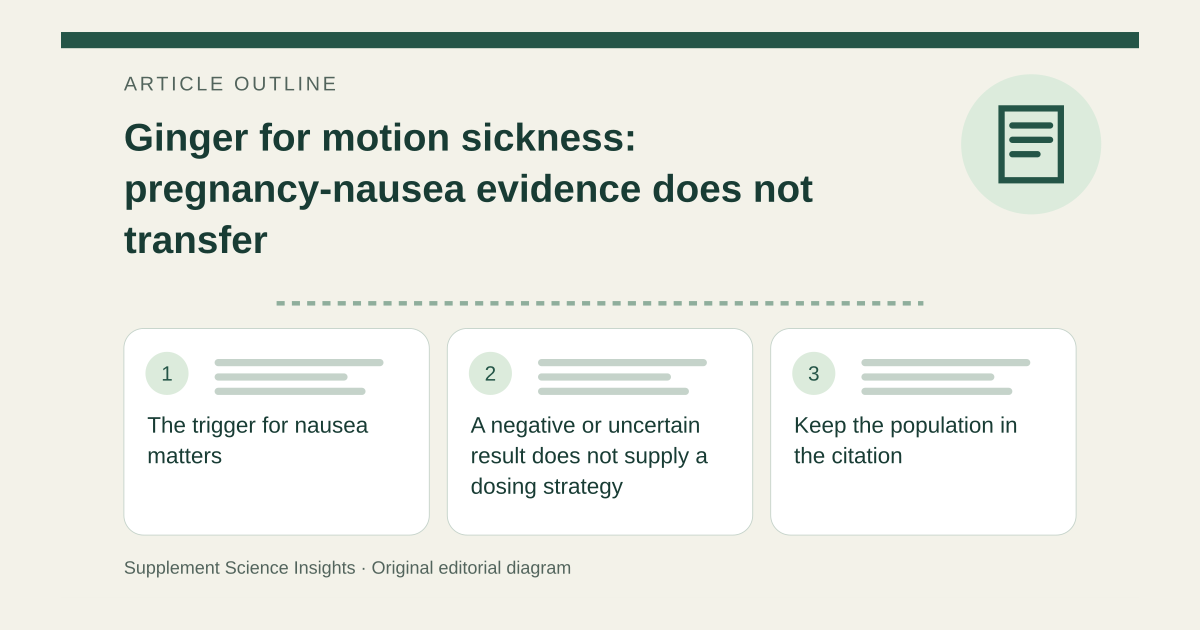
The trigger for nausea matters
NCCIH distinguishes motion sickness from pregnancy-related nausea and reports that most ginger studies for motion sickness have not shown benefit. These findings are not contradictory: different causes and study settings can produce different responses. [1]
The phrase anti-nausea does not establish a universal treatment class in which foods, supplements and medicines can be substituted freely. A comparison with a named medicine would need to test the actual preparations and relevant outcome directly. [1]
A negative or uncertain result does not supply a dosing strategy
Increasing ginger until a sensation is noticeable is not a method for overcoming the evidence gap. Oral ginger can cause heartburn, diarrhea and other digestive discomfort, which may complicate the experience rather than settle whether it prevents motion sickness. [1]
Discuss prevention options with a pharmacist or clinician when needed, including other medicines and the travel context. This source does not establish a ginger loading schedule or a timing interval that makes it equivalent to an approved medicine. [1]
Keep the population in the citation
Imagine an advertisement cites a pregnancy-nausea trial to promise protection during a boat trip. The symptom word is shared, but the trigger and population differ. A relevant motion-sickness study is needed for that claim.
| Question | What matters |
|---|---|
| Pregnancy-related nausea | One clinical setting |
| Motion-triggered symptoms | Another setting |
| Same effect assumed | Not supported by the shared symptom |
Sources for this article
- NCCIH: Ginger
Source consulted: 2026-09-17. This is a reference resource, not a claim that we conducted the studies or tested a product.