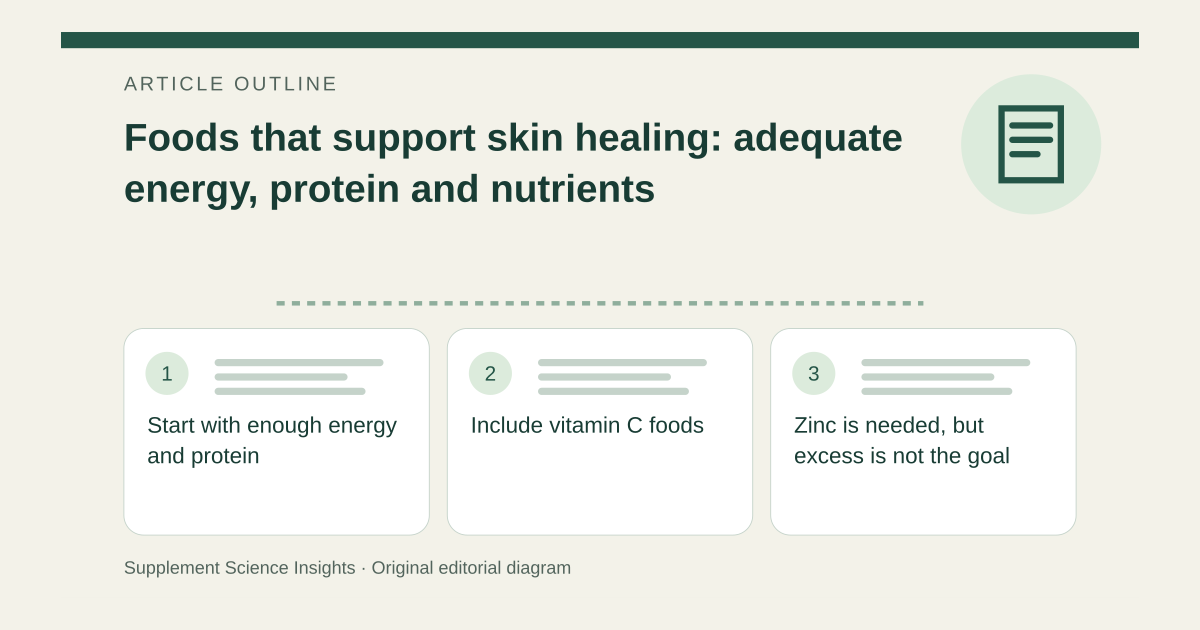
Start with enough energy and protein
Oxford University Hospitals advises adequate energy and protein during wound recovery. Foods such as eggs, fish, meat, beans and lentils can contribute. If eating enough is difficult, ask for a dietitian’s assessment rather than assuming a single vitamin will cover the gap. [1]
Include vitamin C foods
Vitamin C supports collagen production, which is relevant to tissue repair. Fruit and vegetables such as peppers, citrus and broccoli can contribute. This normal requirement does not show that a high-dose supplement will accelerate healing when intake is already adequate. [2]
Zinc is needed, but excess is not the goal
Zinc has a normal role in wound healing. Meat, dairy and other zinc-containing foods can help supply it. Excess supplemental zinc can interfere with copper status, so supplementation should address an assessed need rather than an assumption that more repairs skin faster. [3][1]
Medical conditions change the nutrition plan
The hospital guidance cautions that kidney disease may make a high-protein diet or increased vitamin A intake inappropriate. Follow the treating team’s plan when general nutrition advice conflicts with condition-specific requirements. Nutrition complements wound treatment rather than replacing it. [1]
Build a meal pattern rather than a single-food remedy
Imagine someone recovering from surgery eats very little because of poor appetite. A review might focus on manageable meals containing protein, energy and varied foods, with extra support if needed. Buying zinc alone would leave the overall intake problem unresolved. [1]
| Example | Interpretation |
|---|---|
| Poor food intake | Review energy and protein |
| Adequate nutrients already | Avoid assuming megadoses help |
| Kidney disease | Individual nutrition guidance |
Sources for this article
- Dietary information to promote wound healing — Oxford University Hospitals
Source consulted: 2026-09-20. This is a reference resource, not a claim that we conducted the studies or tested a product. - Vitamin C - Health Professional Fact Sheet
Source consulted: 2026-09-20. This is a reference resource, not a claim that we conducted the studies or tested a product. - Zinc - Health Professional Fact Sheet
Source consulted: 2026-09-20. This is a reference resource, not a claim that we conducted the studies or tested a product.