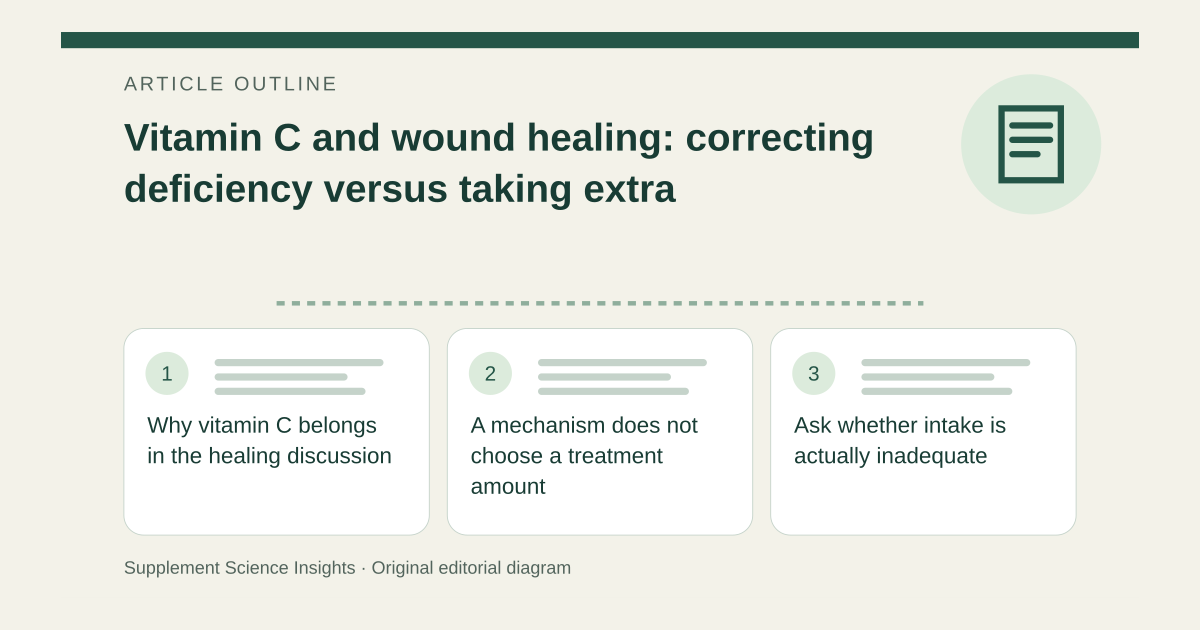
Why vitamin C belongs in the healing discussion
Collagen is a structural component of connective tissue, and vitamin C is required for its synthesis. This provides a clear biological reason that adequate vitamin C matters during tissue repair. [1]
Severe deficiency can weaken connective tissue and cause poor wound healing as part of scurvy. Correcting a deficiency addresses an identifiable nutritional problem; it is different from assuming everyone with a wound needs a large extra dose. [1]
A mechanism does not choose a treatment amount
The ODS summary establishes vitamin C’s normal role and the consequences of deficiency. Those facts alone do not define a universal dose that accelerates healing, a time to recovery or a benefit for every wound type. [1]
To support an additional-dose claim, evidence would need to match the wound, nutritional status, preparation and measured healing outcome. A laboratory collagen result would not automatically establish faster clinical closure or fewer complications. [1]
Ask whether intake is actually inadequate
Imagine a person with a wound has also been eating a very restricted diet. Their food history gives a reason to assess nutritional adequacy alongside the wound itself.
A person already meeting nutritional needs poses a different supplement question. The normal requirement for collagen synthesis does not prove that doubling intake will double healing speed.
| Detail | Meaning |
|---|---|
| Restricted intake | Assess a possible gap |
| Adequate intake already | Extra benefit still needs evidence |
| Slow healing | Do not assume a single-nutrient cause |
Nutrition complements wound assessment
Use regular vitamin C food sources or a clinician-directed plan to address an identified intake problem. Poor healing should still be assessed for its cause rather than explained solely by one nutrient. [1]
High supplemental amounts can cause digestive symptoms and have additional concerns in kidney disorders and iron-overload conditions. This page offers no wound-treatment protocol and no substitute for appropriate care of the wound. [1]
Sources for this article
- NIH ODS — Vitamin C: Health Professional Fact Sheet
Source consulted: 2026-09-17. This is a reference resource, not a claim that we conducted the studies or tested a product.