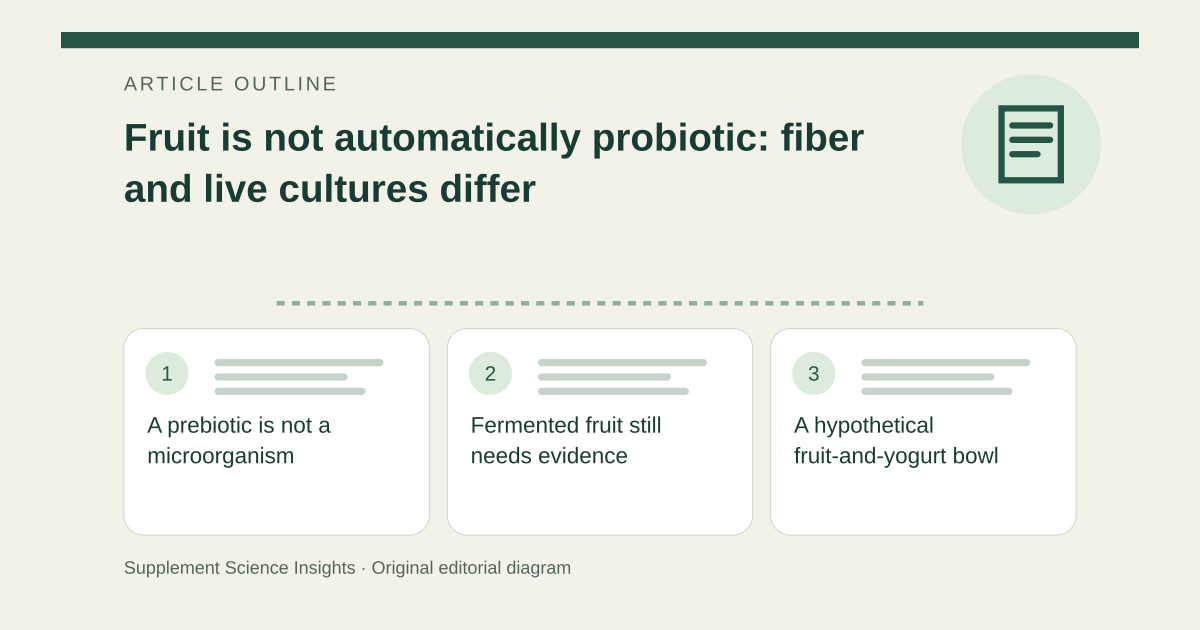
A prebiotic is not a microorganism
NCCIH distinguishes prebiotics, which are substrates used by desirable microbes, from probiotics, which are live organisms. ISAPP lists bananas among foods containing prebiotic components, typically at low levels. That does not make a banana a measured probiotic dose or establish that all fruit fiber has the same effect. [1][2]
Fermented fruit still needs evidence
Fruit can be an ingredient in a fermented product, and ODS notes that juices can also have probiotics added. Neither the presence of fruit nor the fermentation label guarantees a particular beneficial strain or viable quantity. A spontaneous change in stored fruit is not evidence of a tested probiotic product. [3]
A hypothetical fruit-and-yogurt bowl
Imagine a bowl combines banana and a yogurt declaring a studied strain. The banana and microorganism have different roles. You cannot derive the microbial count from the banana’s weight, and the combined meal should not be credited with a specific clinical benefit unless evidence supports that use. [3][2]
| Hypothetical component | What it supplies |
|---|---|
| Banana | Food and potentially microbe-used substrates |
| Yogurt with a named strain | A separate microbial component to evaluate |
Sources for this article
- Probiotics: Usefulness and Safety | NCCIH
Source consulted: 2026-09-20. This is a reference resource, not a claim that we conducted the studies or tested a product. - ISAPP: Prebiotics
Source consulted: 2026-09-20. This is a reference resource, not a claim that we conducted the studies or tested a product. - Probiotics - Health Professional Fact Sheet
Source consulted: 2026-09-20. This is a reference resource, not a claim that we conducted the studies or tested a product.