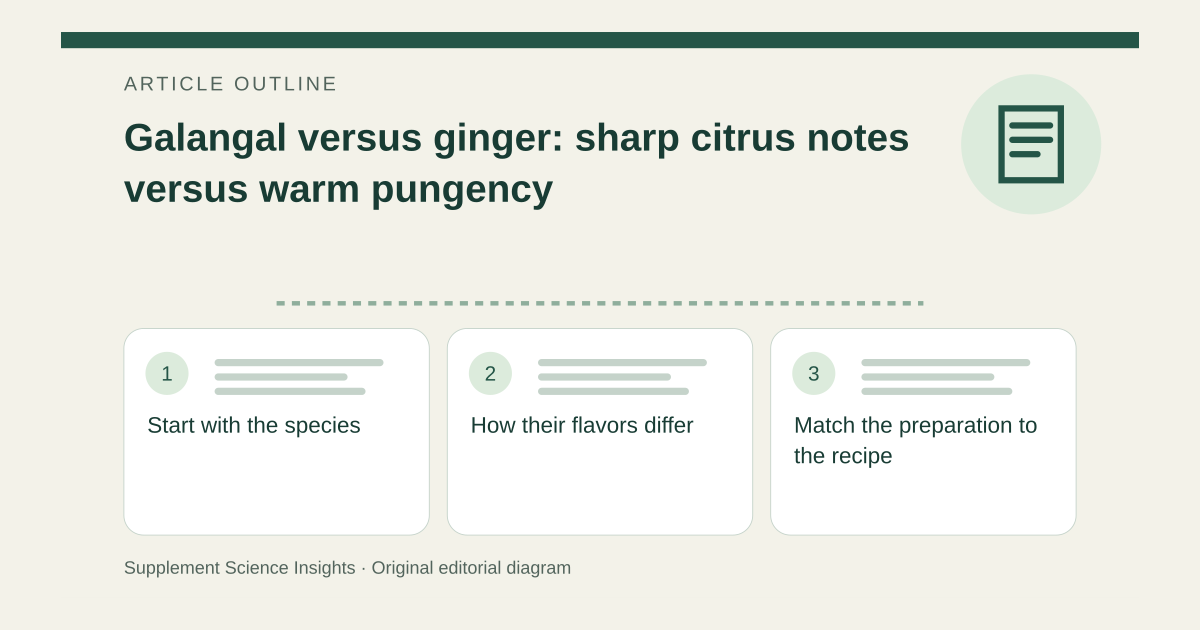
Start with the species
Greater galangal is Alpinia galanga, also called lengkuas. Culinary ginger is Zingiber officinale. Both supply aromatic rhizomes, but a shared family does not make the flavors identical. Sand ginger is another ingredient again, so check what a recipe means by galangal. [1][2]
How their flavors differ
Gardens by the Bay describes galangal through sharp, citrusy notes in Malay and Peranakan spice pastes. NParks describes ginger as hot and pungent, with uses in both sweet and savory cooking. Those descriptions are a better starting point than treating galangal as simply stronger ginger. [3][2]
Match the preparation to the recipe
Galangal can be sliced, added in pieces or pounded into a paste. Its use in rempah, curries and other Southeast Asian dishes depends on the surrounding spices. Follow the recipe’s preparation instructions; changing the spice and changing its form at the same time makes the result harder to predict. [1][2]
A substitution changes the target flavor
Imagine a curry calls for galangal but only ginger is available. Using ginger is a recipe adaptation rather than an exact flavor replacement. Add it to taste and expect a different aroma; neither ingredient’s culinary role establishes a medical benefit. [3][2]
| Choice | What to check |
|---|---|
| Greater galangal | Sharp citrus character; recipe-specific preparation |
| Culinary ginger | Hot pungency in sweet or savory food |
| Substitution | Expect a different finished flavor |
Sources for this article
- NParks | Alpinia galanga (L) Willd
Source consulted: 2026-09-20. This is a reference resource, not a claim that we conducted the studies or tested a product. - NParks: Fort Canning Spice Garden Trail
Source consulted: 2026-09-20. This is a reference resource, not a claim that we conducted the studies or tested a product. - Gardens by the Bay: Malay Garden
Source consulted: 2026-09-20. This is a reference resource, not a claim that we conducted the studies or tested a product.