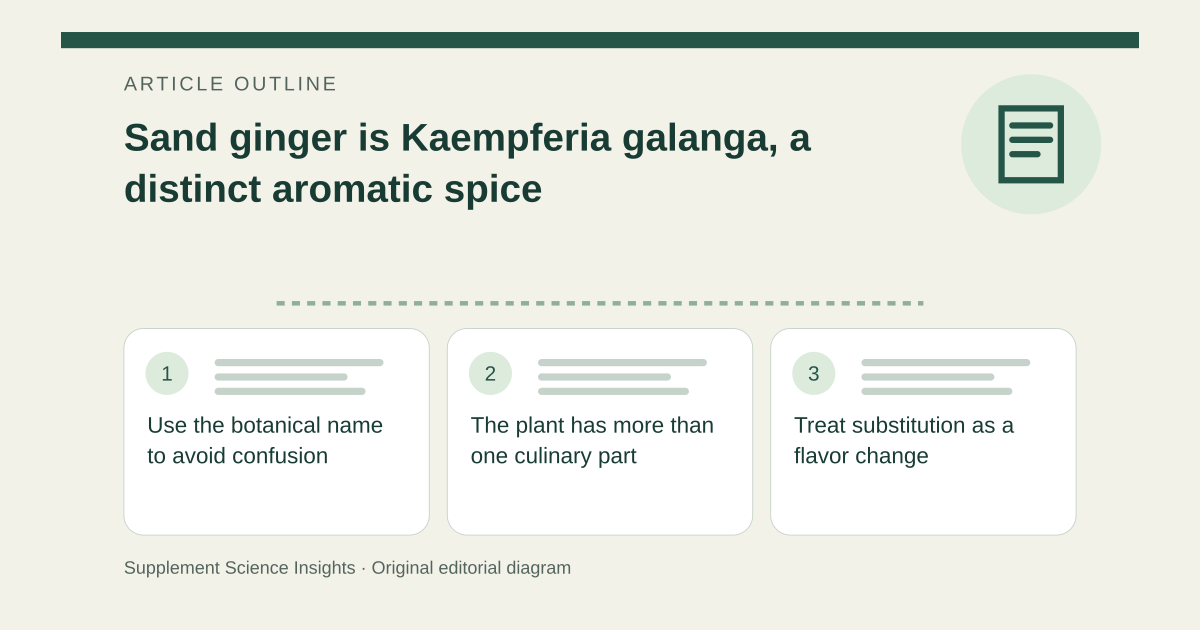
Use the botanical name to avoid confusion
NParks identifies sand ginger as Kaempferia galanga. Common names can be shared across related plants, so the botanical identity is useful when buying a plant or a dried spice. It should not be confused with Zingiber officinale merely because both names contain ginger. [1][2]
The plant has more than one culinary part
NParks describes edible leaves used raw or in soups and rhizomes used to flavor sauces and curries in Malaysian and Indonesian cooking. These are food-use descriptions. They do not establish that a supplement extract treats a disease or that an unidentified ornamental ginger can be eaten safely. [1]
Treat substitution as a flavor change
Imagine a recipe specifies kencur but the shop supplies ordinary ginger. Replacing it changes the aromatic ingredient rather than simply changing brands. Confirm the name with a knowledgeable supplier and use a food-grade ingredient. A gardening plant with an uncertain identity or treatment history is a different purchase from a culinary spice. [1]
| Choice | Practical interpretation |
|---|---|
| Kaempferia galanga | Sand ginger or kencur |
| Zingiber officinale | Ordinary culinary ginger |
| Same family | Does not mean identical flavor or use |
Sources for this article
- Sand Ginger | GardeningSG
Source consulted: 2026-09-20. This is a reference resource, not a claim that we conducted the studies or tested a product. - Zingiber officinale Roscoe | Plants of the World Online | Kew Science
Source consulted: 2026-09-20. This is a reference resource, not a claim that we conducted the studies or tested a product.