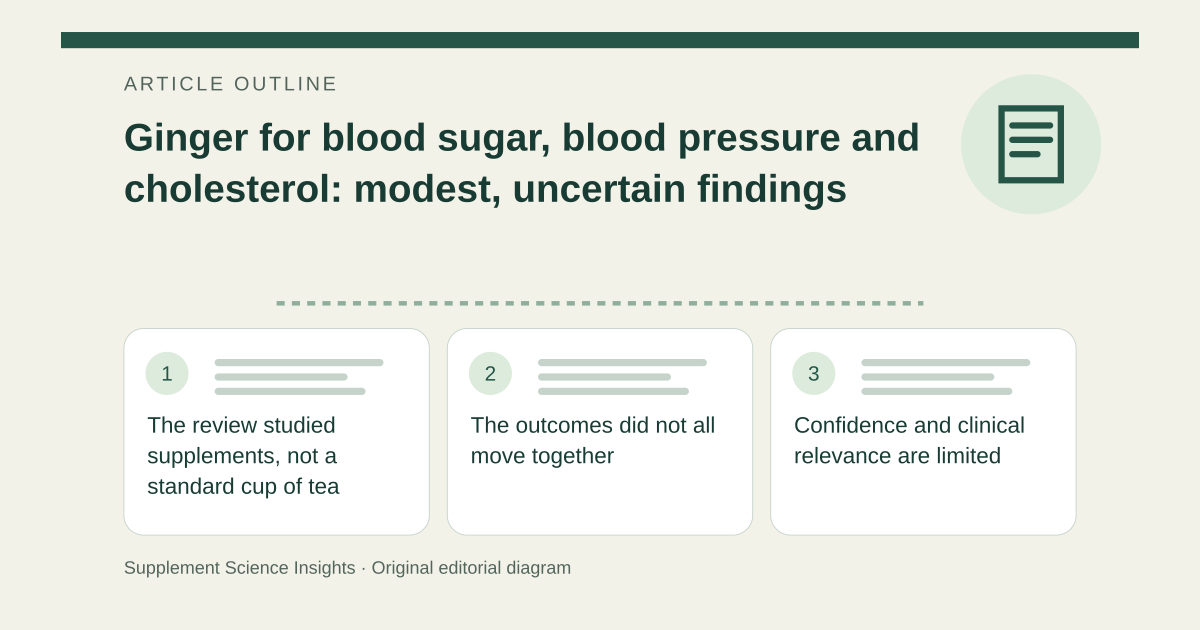
The review studied supplements, not a standard cup of tea
A 2026 systematic review included 13 placebo-controlled trials with 837 participants with type 2 diabetes. Trials lasted 8–12 weeks and used 1.2–3 grams daily. These are descriptions of research exposures, not a prescription or an equivalent amount of homemade tea. [1]
The outcomes did not all move together
Pooled fasting glucose and HbA1c improved, and systolic blood pressure fell by about 1.6 mmHg. Diastolic pressure, total cholesterol and LDL cholesterol did not improve significantly. HDL increased; the triglyceride finding lost significance when one influential study was removed. [1]
Confidence and clinical relevance are limited
The authors rated evidence low or very low certainty, citing small studies, variation and a concentration of trials in one country. They reported institutional and traditional-medicine research funding and no competing interests. These short-term marker findings do not demonstrate fewer heart attacks or strokes. [1]
Diabetes does not create a universal ban on culinary ginger
The important distinction is the person, preparation and treatment plan. MSK flags a possible additional glucose-lowering effect with insulin or diabetes medicines, while stating that its clinical relevance is unknown. This is a reason to review supplements, not proof that everyone with diabetes must avoid a culinary ingredient. [2][3]
Keep established treatment and monitoring in place
NCCIH warns against replacing diabetes care with unproven products. Do not reduce prescribed medicines because a tea or capsule is advertised for blood sugar. A sweetened ginger drink also differs from an unsweetened infusion; the full food and supplement pattern belongs in the care discussion. [4][5]
Ask which outcome the claim promises
Imagine a product cites a triglyceride result but promises to lower LDL and protect the heart. Those are different outcomes. Check the exact measure and population, and discuss any supplement trial with the clinician responsible for glucose and cardiovascular risk management. [1][4]
| Claim | Review finding |
|---|---|
| Lower LDL | No significant pooled improvement |
| Lower systolic pressure | Small average change |
| Prevent a heart attack | Not established by these marker trials |
Sources for this article
- Meta-analysis of the effects of ginger supplementation on glycemic control, blood pressure and lipid profile in patients with type 2 diabetes - PMC
Source consulted: 2026-09-21. This is a reference resource, not a claim that we conducted the studies or tested a product. - Ginger | Memorial Sloan Kettering Cancer Center
Source consulted: 2026-09-21. This is a reference resource, not a claim that we conducted the studies or tested a product. - Ginger: Usefulness and Safety | NCCIH
Source consulted: 2026-09-21. This is a reference resource, not a claim that we conducted the studies or tested a product. - Diabetes and Dietary Supplements: What You Need To Know | NCCIH
Source consulted: 2026-09-21. This is a reference resource, not a claim that we conducted the studies or tested a product. - Botanical Dietary Supplements Background Information - Consumer
Source consulted: 2026-09-21. This is a reference resource, not a claim that we conducted the studies or tested a product.