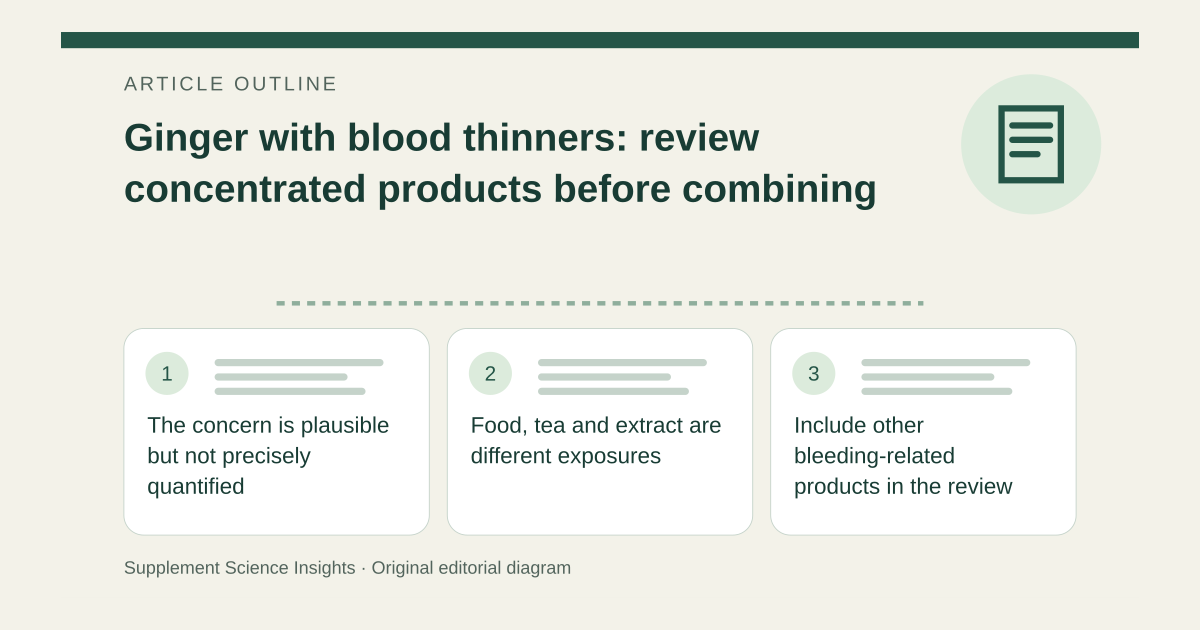
The concern is plausible but not precisely quantified
MSK describes platelet-related effects and a possible interaction with anticoagulants, while noting that a systematic review found the evidence inconclusive. This does not establish a reliable percentage risk or a dose that is safe for every person. It also does not show that ginger provides the proven benefits of a prescribed anticoagulant. [1]
Food, tea and extract are different exposures
A small amount in a meal is not the same preparation as a concentrated capsule or repeated strong shots. Botanical extracts vary, and the full formula matters. Do not convert a culinary habit into a supplement safety guarantee. [2][3]
Include other bleeding-related products in the review
MSK also flags possible increased bleeding risk with NSAIDs such as ibuprofen. Tell the pharmacist about pain medicines and all supplements, not just the blood thinner. Before a procedure, follow the surgical team’s supplement instructions rather than choosing a stop interval yourself. [1]
Know the warning signs
Severe or recurrent bleeding, black stools, blood in urine or vomit, or bleeding that does not stop requires prompt medical attention. A significant head injury while taking an anticoagulant also needs immediate assessment. Do not independently discontinue the prescribed anticoagulant to accommodate ginger. [4]
Ask about the actual combination
Imagine a person takes an anticoagulant and wants ginger capsules for nausea. Bring the capsule label and all medicines to the pharmacist. The relevant question is whether that preparation is suitable in that treatment plan, not whether ginger is natural. [3][2]
| Item | Information to provide |
|---|---|
| Ginger preparation | Food, tea, extract and amount |
| Medicines | Anticoagulant and nonprescription pain medicines |
| Procedure or bleeding symptoms | Changes urgency and suitability |
Sources for this article
- Ginger | Memorial Sloan Kettering Cancer Center
Source consulted: 2026-09-21. This is a reference resource, not a claim that we conducted the studies or tested a product. - Botanical Dietary Supplements Background Information - Consumer
Source consulted: 2026-09-21. This is a reference resource, not a claim that we conducted the studies or tested a product. - Ginger: Usefulness and Safety | NCCIH
Source consulted: 2026-09-21. This is a reference resource, not a claim that we conducted the studies or tested a product. - Anticoagulant medicines - Side effects - NHS
Source consulted: 2026-09-21. This is a reference resource, not a claim that we conducted the studies or tested a product.