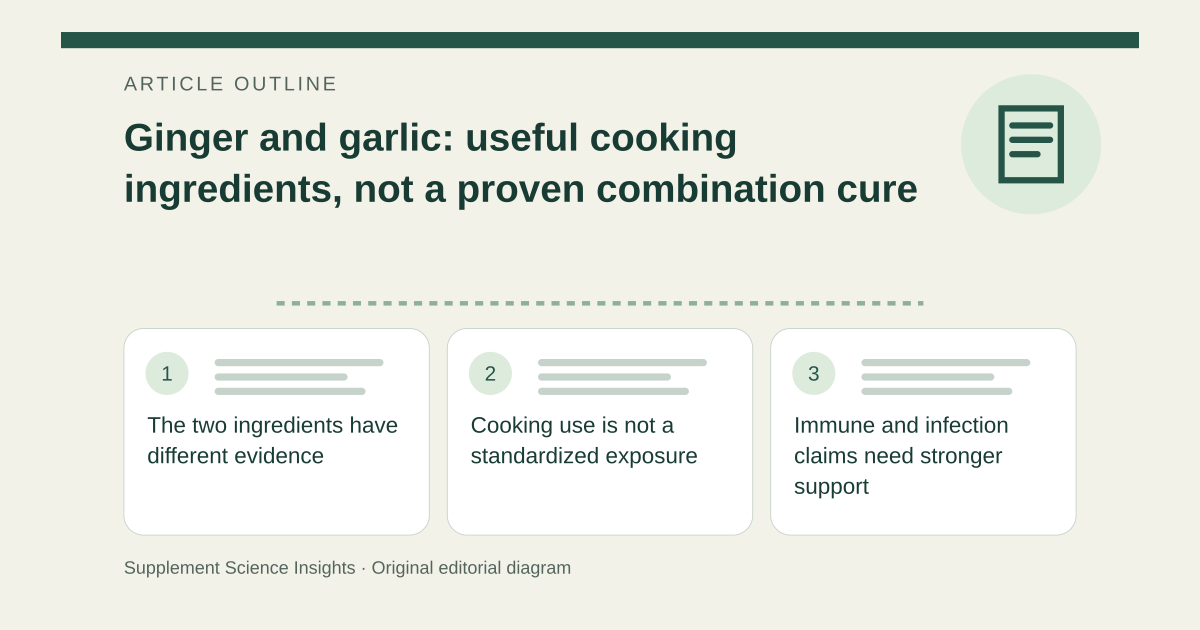
The two ingredients have different evidence
NCCIH describes ginger findings mainly for specific nausea settings and some other symptoms, often using supplements. Garlic supplements may have small effects on cholesterol or blood pressure in relevant populations. These separate findings do not prove a combined ginger-garlic recipe has the same effects. [1][2]
Cooking use is not a standardized exposure
The amount, preparation and rest of a dish determine the food exposure. A spoon of a homemade paste is not interchangeable with a studied extract capsule. Use the ingredients for taste without converting a kitchen portion into a treatment promise. [3][1][2]
Immune and infection claims need stronger support
NCCIH says very little research supports garlic supplements marketed for immune boosting. A laboratory mechanism or traditional use cannot establish that the combination prevents colds or treats an infection. Clinical benefit must be demonstrated for the preparation and outcome being claimed. [2][4]
More concentrated use can add adverse effects
Ginger can cause heartburn or gastrointestinal symptoms; garlic can cause abdominal discomfort, gas and nausea. Garlic supplements may increase bleeding risk, so disclose them before procedures and when taking medicines that affect bleeding. Natural ingredients are not automatically suitable in unlimited amounts. [1][2]
Keep the goal concrete
Imagine adding ginger and garlic to a vegetable dish for flavor. That is a different decision from replacing a cholesterol medicine with a concentrated supplement stack. Review the actual goal and evidence with the clinician before making a treatment change. [2][4]
| Use | Interpretation |
|---|---|
| Flavoring a meal | Culinary choice |
| Taking concentrated extracts | Dose and interaction review needed |
| Replacing treatment | Not justified by separate ingredient claims |
Sources for this article
- Ginger: Usefulness and Safety | NCCIH
Source consulted: 2026-09-21. This is a reference resource, not a claim that we conducted the studies or tested a product. - Garlic: Usefulness and Safety | NCCIH
Source consulted: 2026-09-21. This is a reference resource, not a claim that we conducted the studies or tested a product. - Ginger - Vegetable Resources Vegetable Resources
Source consulted: 2026-09-21. This is a reference resource, not a claim that we conducted the studies or tested a product. - Dietary Supplements: What You Need to Know
Source consulted: 2026-09-21. This is a reference resource, not a claim that we conducted the studies or tested a product.