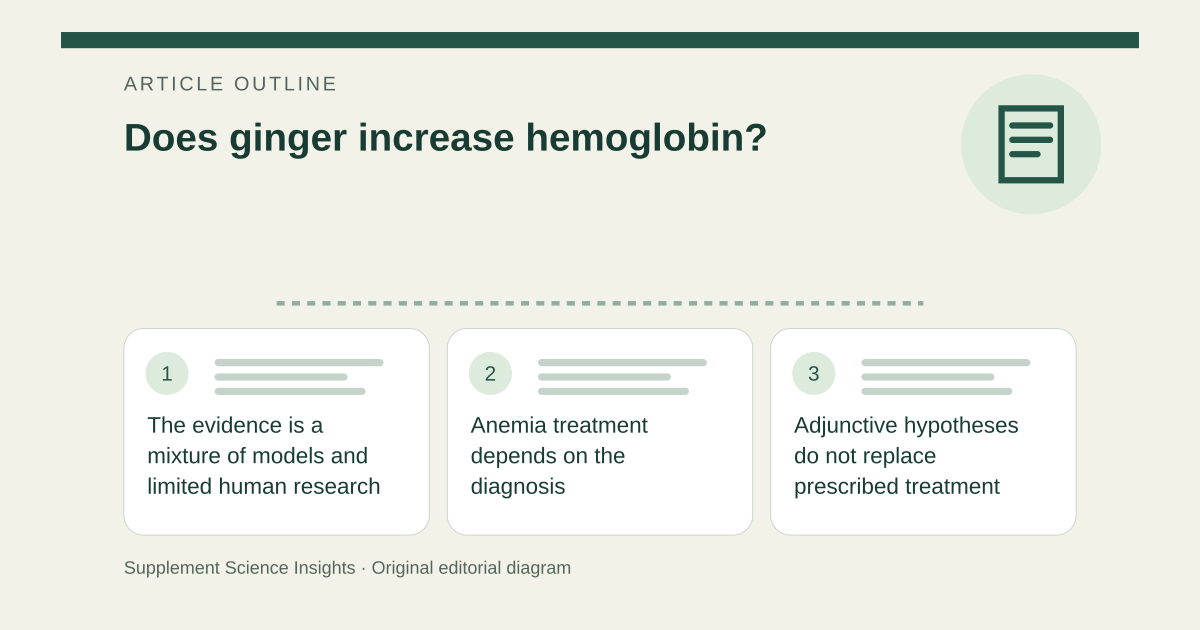
The evidence is a mixture of models and limited human research
The ginger-and-iron review considers absorption, inflammation and red-cell production across laboratory, animal and limited clinical studies. It does not establish a standard ginger treatment for low hemoglobin. The review received Australian Traditional-Medicine Society funding and reported no conflicts. [1]
Anemia treatment depends on the diagnosis
NHLBI distinguishes causes and severity. Iron can help iron-deficiency anemia, while B12 replacement helps B12-deficiency anemia. Other causes may require different treatment; unnecessary iron can cause harm. A spice cannot diagnose which problem is present. [2]
Adjunctive hypotheses do not replace prescribed treatment
Even if ginger eventually proves useful alongside iron for a particular outcome, that would not establish it as a substitute or explain ongoing blood loss. Continue the treatment and follow-up recommended for the actual cause. [1][2]
Use follow-up results to assess the actual plan
Imagine a person switches from prescribed iron to ginger tea because both are called blood-building. The tea does not supply an equivalent therapy. Discuss tolerance problems or poor response with the treating team rather than substituting an unvalidated regimen. [2]
| Situation | Relevant distinction |
|---|---|
| Low hemoglobin | Several possible causes |
| Iron deficiency | Targeted iron treatment |
| Ginger laboratory finding | Not a proven regimen |
| Poor treatment response | Review cause and plan |
Sources for this article
- Polyphenol-Rich Ginger (Zingiber officinale) for Iron Deficiency Anaemia and Other Clinical Entities Associated with Altered Iron Metabolism - PMC
Source consulted: 2026-09-21. This is a reference resource, not a claim that we conducted the studies or tested a product. - Anemia - Treatment and Management | NHLBI, NIH
Source consulted: 2026-09-21. This is a reference resource, not a claim that we conducted the studies or tested a product.