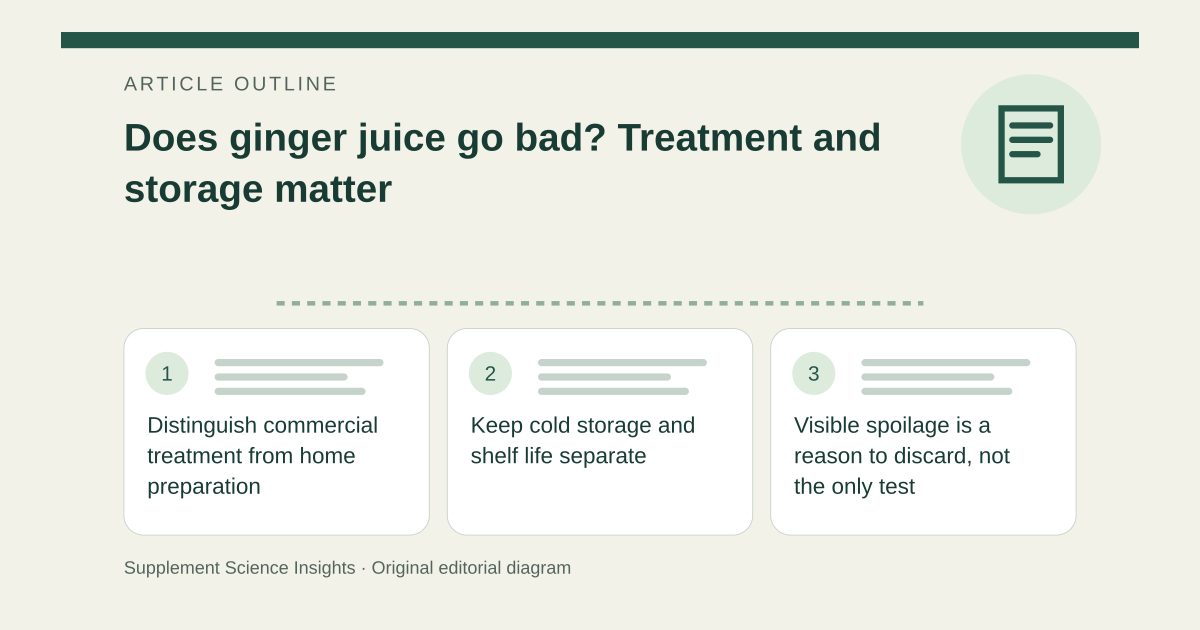
Distinguish commercial treatment from home preparation
Pasteurized or otherwise treated juice differs from a freshly squeezed untreated preparation. FDA documents foodborne illness linked to untreated juices and identifies groups at greater risk. A homemade ginger juice blend does not become equivalent to a treated commercial bottle because it contains lemon or tastes pungent. [1]
Keep cold storage and shelf life separate
Refrigeration slows microbial growth but does not establish one safe shelf life for every recipe. Ingredients, handling and treatment differ. Follow the commercial label after opening; for homemade juice, prepare small quantities, refrigerate promptly and do not claim a multiweek storage period without a validated process. [2]
Visible spoilage is a reason to discard, not the only test
Imagine a bottle has mold, unexpected fermentation or leakage. Do not taste it to test whether it is acceptable. Equally, a bottle can look and smell normal despite unsafe handling: USDA notes that pathogens need not change sensory appearance. When the storage history is uncertain, do not rely on ginger’s aroma as reassurance. [2]
| Example | What it means |
|---|---|
| Treatment statement | Relevant to microbial control |
| Refrigerated bottle | Not an unlimited shelf life |
| Normal smell | Does not prove safety |
Sources for this article
- What You Need to Know About Juice Safety
Source consulted: 2026-09-20. This is a reference resource, not a claim that we conducted the studies or tested a product. - Refrigeration and Food Safety
Source consulted: 2026-09-20. This is a reference resource, not a claim that we conducted the studies or tested a product.