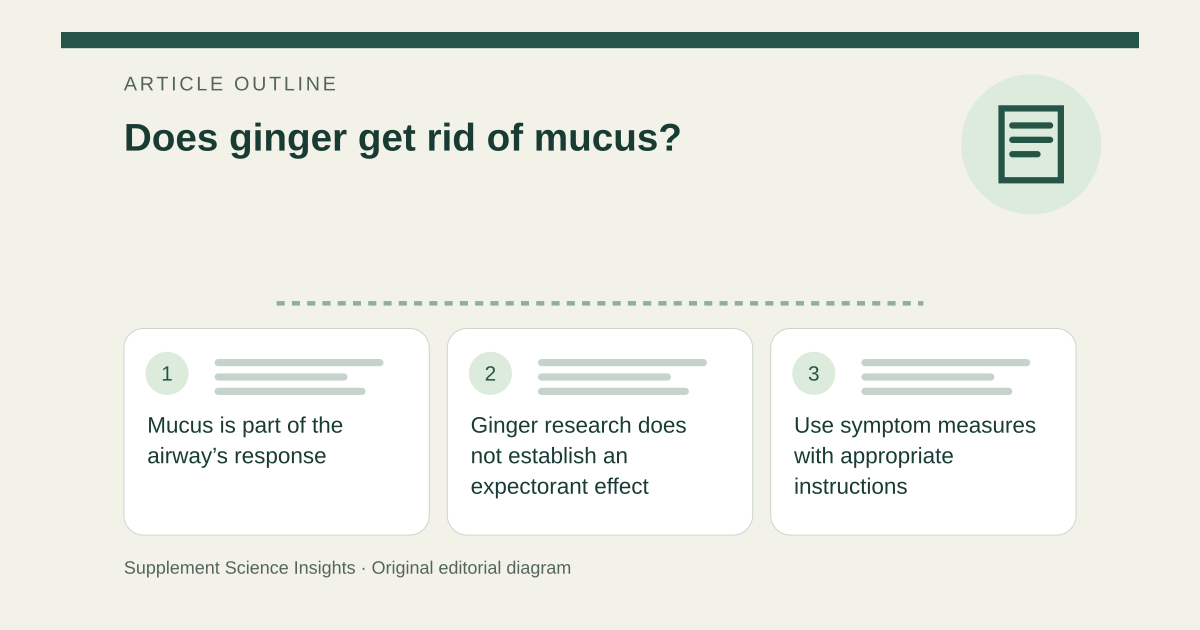
Mucus is part of the airway’s response
NHS describes excess mucus with infections, irritants and allergic rhinitis. It is not inherently harmful material that must be flushed out with a stronger remedy. Persistent symptoms warrant finding the cause. [1]
Ginger research does not establish an expectorant effect
NCCIH’s clinical summary mainly concerns nausea, menstrual cramps and some pain questions. It does not establish a ginger tea dose that clears airway mucus. Mouth and throat irritation are possible adverse effects. [2]
Use symptom measures with appropriate instructions
NHS suggests fluids and options such as saline nasal rinses, with advice from a pharmacist. Nasal-rinse water must be prepared safely; follow the product or clinical instructions. A ginger drink can be optional if tolerated, but it is not the active treatment established by that guidance. [1]
Persistence changes the next step
Imagine a warm drink briefly soothes the throat but drainage continues for weeks. That calls for review rather than increasing ginger. NHS advises assessment when catarrh lasts more than a few weeks or new swallowing or other symptoms develop. [1]
| Observation | Meaning |
|---|---|
| Warm drink feels soothing | Temporary comfort |
| Throat burns | Possible irritation |
| Persistent drainage | Investigate cause |
| More concentrated ginger | Not proven more effective |
Sources for this article
- Catarrh - NHS
Source consulted: 2026-09-21. This is a reference resource, not a claim that we conducted the studies or tested a product. - Ginger: Usefulness and Safety | NCCIH
Source consulted: 2026-09-21. This is a reference resource, not a claim that we conducted the studies or tested a product.